I Need to Be What I Couldn’t Find
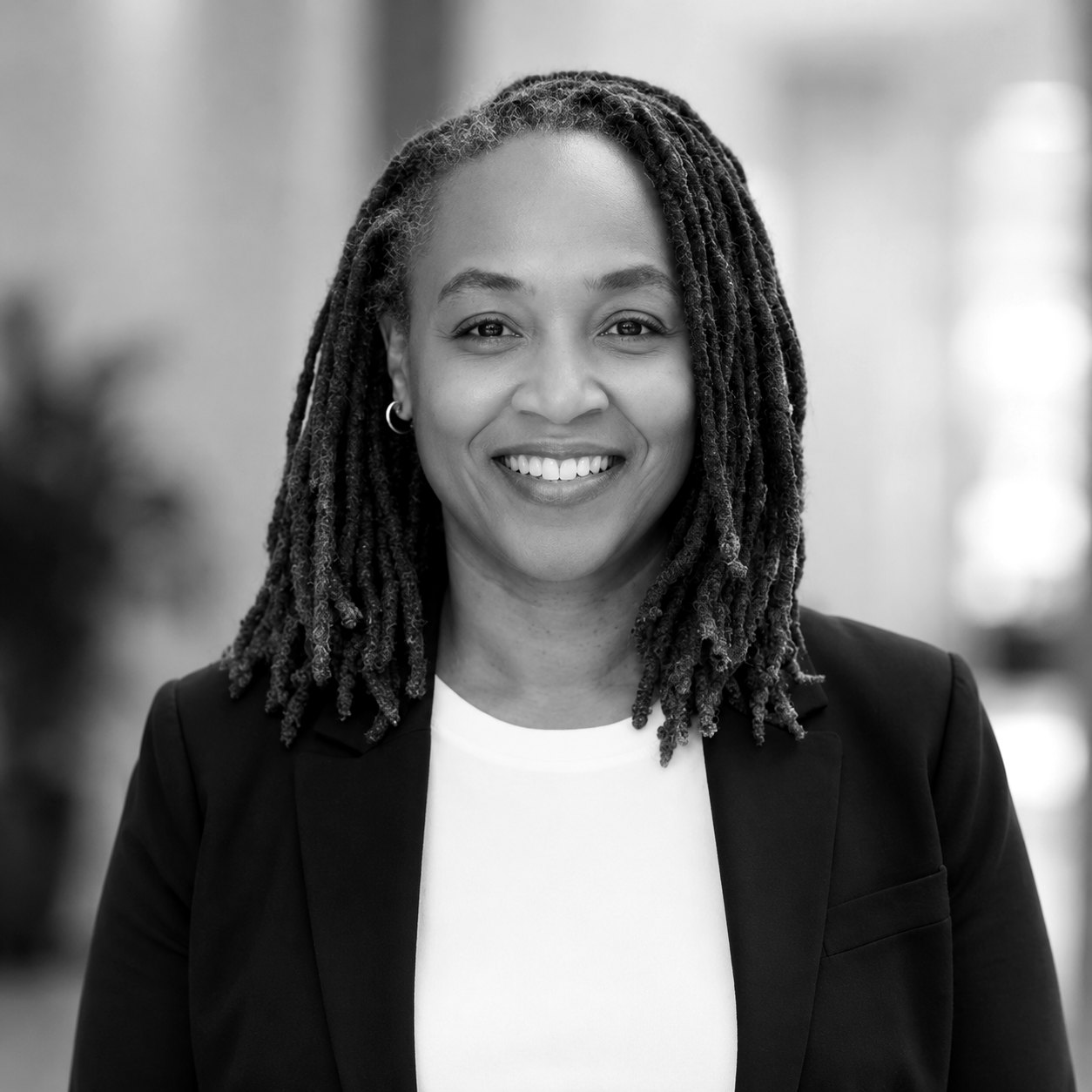
Melanie Myles was passed over for vice president three times. After the third, she went home and got under the covers. Then she built the coaching practice she had gone looking for and couldn’t find.
I.
The pipeline runs eight hundred miles. It does not stop for weather, or for holidays, or for a pandemic. Twenty-four hours a day, three hundred and sixty-five days a year, and somebody has to be accountable for all of it at once.
Melanie Myles ran operations on it for twelve years.
“I definitely have kind of standard hours,” she says, “but you’re always on. If something happens, if there’s an emergency, if there’s an upset, you’re always on and you’ve got to be ready to respond.”
She is a mechanical engineer whose career spans more than thirty years in engineering and operations leadership, including project management. Thirty-one years of running toward dates on calendars she did not set.
She retired in December 2025.
“I have no intention of ever working nine to five ever again. Or at least not five days in a row.”
II.
Ask her about being a woman in that field and she corrects the premise before answering it.
“It doesn’t even start when you start working. It starts in college.”
What she describes is an expectation. “Women are expected to be the notetakers, the support system, the backup, and in the shadows. And anytime you step out of that role, you’re met with resistance from the men.”
So there is a line to walk, and she is precise about how it works: you are trying to show up as your full self while knowing there is a headwind coming at you constantly. The real cost is what the headwind does to your own reading of yourself.
“If you can get through an engineering degree, you’re pretty tough,” she says. “But when you’ve got this constant struggle you’re dealing with, it can start to erode your confidence. It can start making you think you’ve got to change how you show up.”
“We take the same classes, we earned the same degrees, we know the same things, but yet we’re usually having to jump through all these hoops to prove that we belong there.”
She has a second observation about that field, and it is the one nobody puts in a recruitment brochure. Female engineers are often the only ones in the room. “You’re not one of the boys. You don’t want to be one of the boys. But there’s no one else around who understands what your struggle is.” Your head is down. You are working hard. “You don’t realize how much that is working against you until it’s too late.”
III.
She has a name for how it ended, and she gives talks on it now. She calls it a slow roll.
It started in 2018 with a reorganization that handed her a large piece of the company. That meant people at the top of the pipeline, people in the middle, people at the bottom, and an executive leadership team, all of whom expected her to make magic happen. “I was ping-ponging everywhere and nowhere.”
Then COVID. The pipeline system was considered critical infrastructure; it kept running; the crews stayed on. Melanie became the incident commander for the company’s pandemic response.
Leadership had changed by then, and the new leadership wanted the pandemic finished on a schedule that had nothing to do with the pandemic. Being the person responsible for saying otherwise put her on the wrong side of that quickly.
She worked with her teams to protect employees. No major outbreaks. Nothing stopped moving.
“It was nuts. But kept everybody safe.”
IV.
She went up for vice president three times. She was turned down three times.
The third one was the one that did it, and the reason it did it is the part worth slowing down for. The merits were never in question.
“I met all of the requirements and preferences for that role and I knew I was ready. As women, we have a tendency to wait until we are 110% qualified and still feel like it’s a stretch opportunity. In this instance, the fit couldn’t have been any better.”
She had the full support of the whole organization. She did not get the job, and no one gave her a reason that made sense.
“Being in this industry, but also just being a Black woman in America — there’s always, you learn to just roll with things, right? But they stack up.”
“That third denial was the last straw. It was a gut punch that brought to the surface every injustice and microaggression that I had ‘rolled with’ for my entire career.”
“I went home and spent a couple of days in my room, under the covers, grieving the loss of a belief that had shaped my life: that hard work was the key to success.”
Her oldest daughter, twenty-eight and home visiting, stepped in and looked after the younger two. Melanie is clear-eyed about what that made possible.
“For once, I allowed myself to fall apart. My daughter was there, and I didn’t have to hold everything together for those few days.”
What was going on under the covers was an interrogation, and the questions were all pointed inward. How did you let this happen. Why are you incapable of moving forward. Why didn’t you have a backup plan.
She had an engineer’s answer for it within days, and it is the most useful sentence in this piece.
“I had become a single point of failure with dependence on a toxic environment and too few external connections.”
All the eggs in one basket. She had stopped nurturing the network, stopped maintaining the connections, stopped tending the things that would have given her somewhere else to stand. The workload had crowded it all out. “If you’re not tending to that, you’re always going to feel like you’re stuck, and you’re always going to make bad decisions based on fear versus knowledge.”
V.
Before the third denial her body had already filed its report. Heart palpitations. A trip to the emergency room, because she thought she was having a heart attack. A monitor worn for days. Every specialist there was.
The cardiologist came back with the results and they were excellent. One of the best sets of readings he had seen.
Then he told her what she needed.
“You need yoga.”
“Yoga?” she says, still incredulous two years later. “You’re telling me yoga.” It was stress. Her cortisol was through the roof. Her heart was fine and her life was not, and the second thing had been producing symptoms of the first.
There is also a name for the stacking she described, and it belongs to a public-health researcher rather than a management consultant. In 1994 Sherman James published on what he called John Henryism: a disposition toward prolonged, high-effort coping with difficult social and economic stress. His argument was that working that hard is expensive for people who do not have the resources to make it pay off. In his North Carolina data, among Black adults who scored high on high-effort coping, the prevalence of hypertension was 31.4 percent at low socioeconomic status against 11.5 percent at high, while among low scorers, status barely mattered at all.
James was careful, and so we should be: every study was cross-sectional, nothing was longitudinal, and there is no verified finding specific to Black professional women. What the term offers is a name for a thing she had already described in her own words.
You learn to just roll with things. But they stack up.
VI.
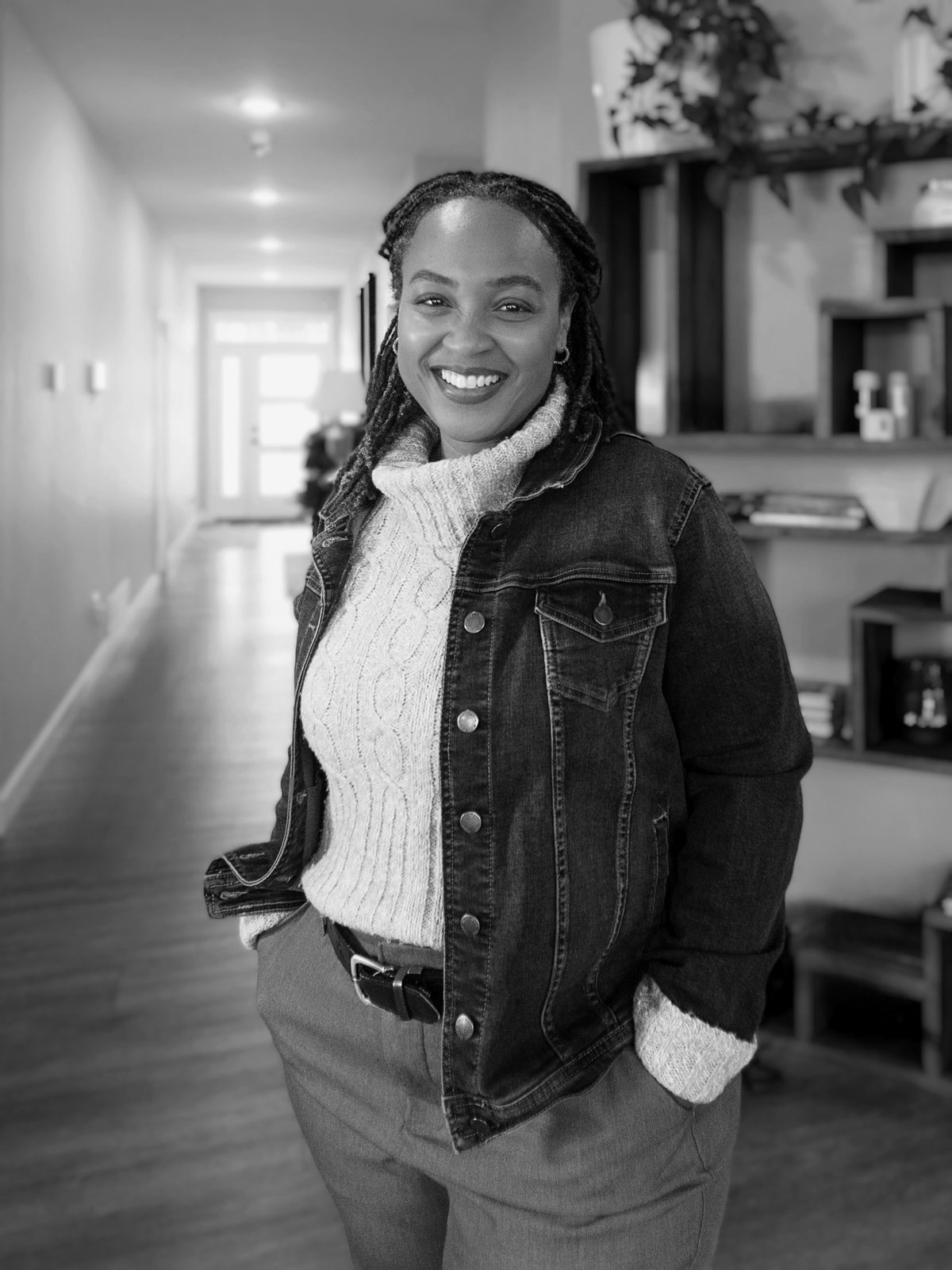
She went back to work the following week. She was not good company and she said so out loud, which was itself new.
Then she did something that cost her, on purpose. She scaled back. Therapy. Boundaries. Saying no.
“I’m an exceeds. Always have been, my whole career. They’re always used to me giving a hundred and ten, a hundred and fifty percent, whatever it took. And after that, particularly the promotion bit, it’s like — I’m working hard for nothing. I’m sacrificing my health for nothing.”
The company used a five-point scale. She went from a five to a three.
She wants two things understood about that year. The first is that she had to work at being all right with being average. The second is the part that should be printed on the wall of every performance-review room in America.
“It wasn’t that what I was giving wasn’t the same quality. They just were used to getting a quantity that I was no longer willing to give them.”
The following year she was rated exceeds again. She had not increased her output. Everyone had simply adjusted, including her.
VII.
Somewhere in there the company gave her an executive coach, and the timing of that gift tells you most of what you need to know about how corporations handle their best people.
“They wait till they think there’s a problem, and then they want to give you a coach. And then you’ve got this negative connotation of — I’m in trouble. You’re giving me a coach because I’m in trouble.”
“You should be giving me a coach to keep me from getting to that point.”
The coach they assigned her was, in Melanie’s telling, a lovely woman from Texas. They are still friends on Facebook. And she could not understand the racial and gender dynamics part of her client’s struggle, which left the two of them in an arrangement Melanie describes with an engineer’s exactness.
“There’s lots of people who are empathetic, and I can tell people my story and you feel empathetic about it. But the fact that I have to explain the offense to the offender is not the most healing and safe space to be in.”
So she went looking for a different coach. She could not find one who looked like her.
That is the sentence the business is built on: a search that came back empty.
“All those things combined, I was like — okay, I need to now be what I couldn’t find for people.”
VIII.
She built the exit the way she would have built anything else. She calls it an offramp, and she started laying it while she was still inside.
The business is about three and a half years old on paper. She has only been running at it actively since October 2025. She set up the entity, took an executive coaching client, did some paid workshops and some speaking, started assembling a cohort program. All of it while the day job was still the day job.
Then the company announced a reduction in force and offered packages, and Melanie did something almost nobody does. She raised her hand.
“I said, if you give me a package — if it’s a good enough package — I’ll go.”
Here is where the machinery finally worked in her favor. Her stepping out solved a problem for somebody above her.
She left in December. She is a team of one and intends to stay picky.
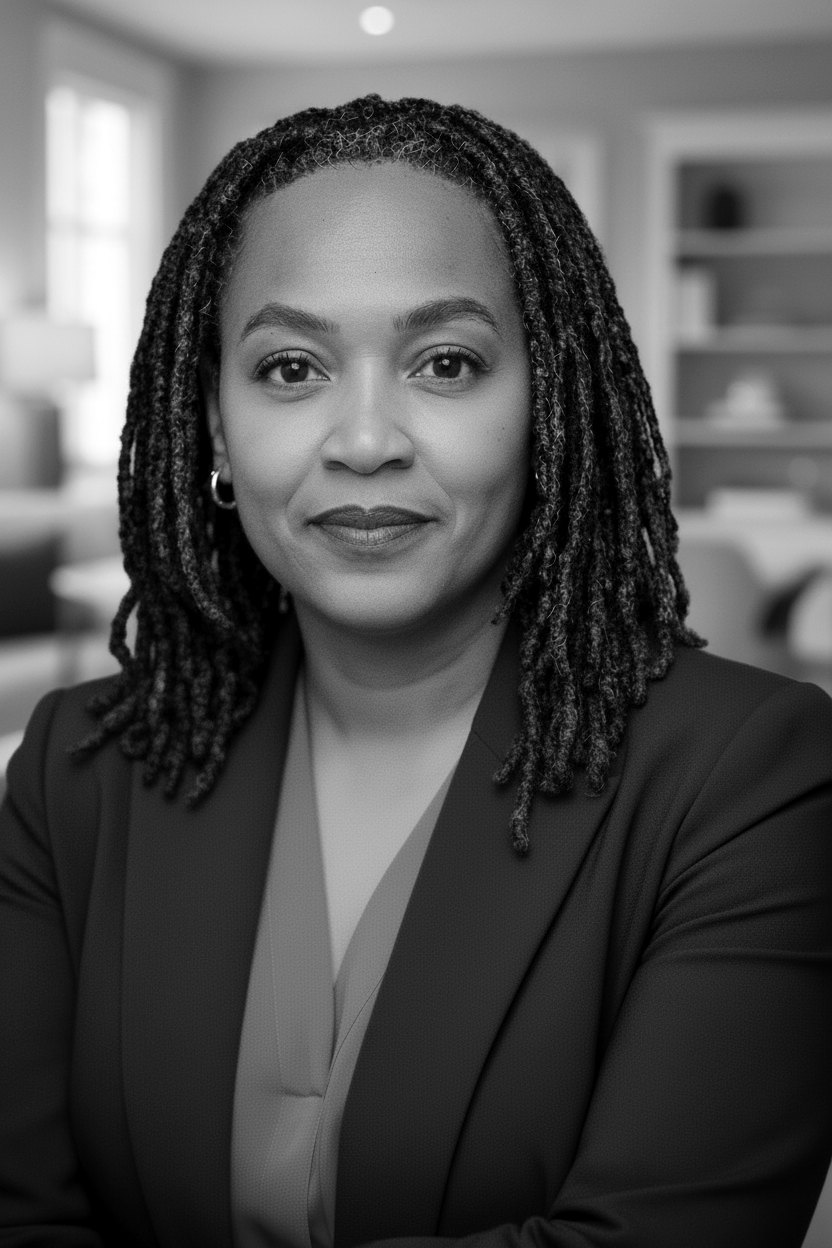
“Money is not a driver for me anymore. I mean, I still want to make it, don’t get me wrong. But it’s not a driver.” What she wants is a waitlist, so that she gets to choose. And she will not open the doors until the experience is right.
“I want women to feel safe here. To have room to speak honestly, think things through, and get hands-on support that takes their actual situation into account. I want them to leave clearer about what they want and how to go after it, with more control over what happens next. That level of personal attention matters to me, and I’m being intentional about how I grow so I can protect it.”
Ask her what keeps her up at night and she looks at you like the question is malformed. Nothing does. It never did, even running the pipeline, because she knew she had built an amazing team and they would rise to meet whatever challenge came up.
“I’m in a place where I know I’ll figure it out, and it’s just a matter of time.”
What it does is wake her up early. She is building the things that have been running around in her head, and for the first time she does not have to wait on anybody else to build them for her.
“I wake up ready to play with something new. To get another piece of the plan laid.”
IX.
There are three daughters. The oldest is twenty-eight and also a mechanical engineer, now inside a corporation and already frustrated by how slowly everyone moves. The two younger ones are still at home, and the youngest is already a foot taller than her mother.
There was a divorce in there too, somewhere after the pandemic. She waves at it once and moves on. She was the primary parent throughout — the school schedules, the doctors’ appointments, the whole administrative weight of a household — while running the pipeline at a hundred and ten percent.
What she does differently with her girls is talk. Her parents came from the generation where children were seen and not heard, and she spent her twenties discovering things nobody had thought to tell her.
So her daughters know about the finances. They knew before she quit her job. They know what she is struggling with in the business. Some of what they say changes her decisions and some of it does not, and the conversation happens either way.
“I want them to know why I’m doing it, not just see what I’m doing.”
Everyone in her life encouraged her to leave, which she had not expected. She was certain somebody would ask what she thought she was doing walking away from a six-figure job. Nobody did. And her daughters know the thing that makes the whole example legible, because she told them.
“They know that I didn’t quit my job with zero money in the bank. I would not be quitting my job. But they know that’s not the case.”
“You have to be able to support whatever kind of lifestyle you want to have for yourself.”
Ask what she would tell a woman a few steps behind her and her answer goes straight to the trap that catches the most capable people in any room.
“There’s this trap that highly capable people fall into, which is that we know we can figure anything out. But we also then think that we have to figure it out by ourselves.”
Build the community sooner. Ask for help sooner. Do not do it alone.
“You don’t have to figure it out on your own, and there’s other people out there willing to support you.”
For thirty-one years Melanie Myles was the person who could figure anything out.
She was also, by her own diagnosis, a single point of failure. One basket. No redundancy. Which is the one design flaw an operations engineer is trained never to leave in a system, and she had left it in herself.
She is fixing it in the least sentimental way available. She built the network she stopped tending. She raised her hand and negotiated her own exit. She kept her health and let the rating drop. And she went looking for the coach she needed, found nobody, and became her.
The company gave her a coach when they thought she was the problem. She is building one for the women who are not.
Freedom looks like
“Being able to be confident in my decisions.”
When you’re really rooted in who you are and what you want, when it’s time to make those hard decisions, you can make it. And you can make it quickly. Melanie Myles · Arctic Butterfly Coaching & ConsultingFree · Every Friday
The Bellwether Brief, free
One email a week with the week’s stories.
Sources: US Bureau of Labor Statistics, Current Population Survey, Table 11, 2025 · Williams, Li, Rincon & Finn, Climate Control, Center for WorkLife Law & Society of Women Engineers, 2016 · Lean In, The State of Black Women in Corporate America, 2020 · McKinsey & LeanIn.Org, Women in the Workplace 2025 · Dragano et al., Epidemiology 28(4), 2017 · Kivimäki et al., The Lancet 380, 2012 · Danhof-Pont, van Veen & Zitman, Journal of Psychosomatic Research 70(6), 2011 · James, “John Henryism and the Health of African-Americans,” Culture, Medicine and Psychiatry 18, 1994 · International Coaching Federation, 2025 Global Coaching Study.