You’re Going to Bring So Much Whimsy
Amanda Porter spent much of her career being the person a company sent in to deliver the layoffs. Then her own role was eliminated. Eighteen months later she runs the firm, and on a Tuesday afternoon she was in a baby pool in the yard with a crossword book.

I.
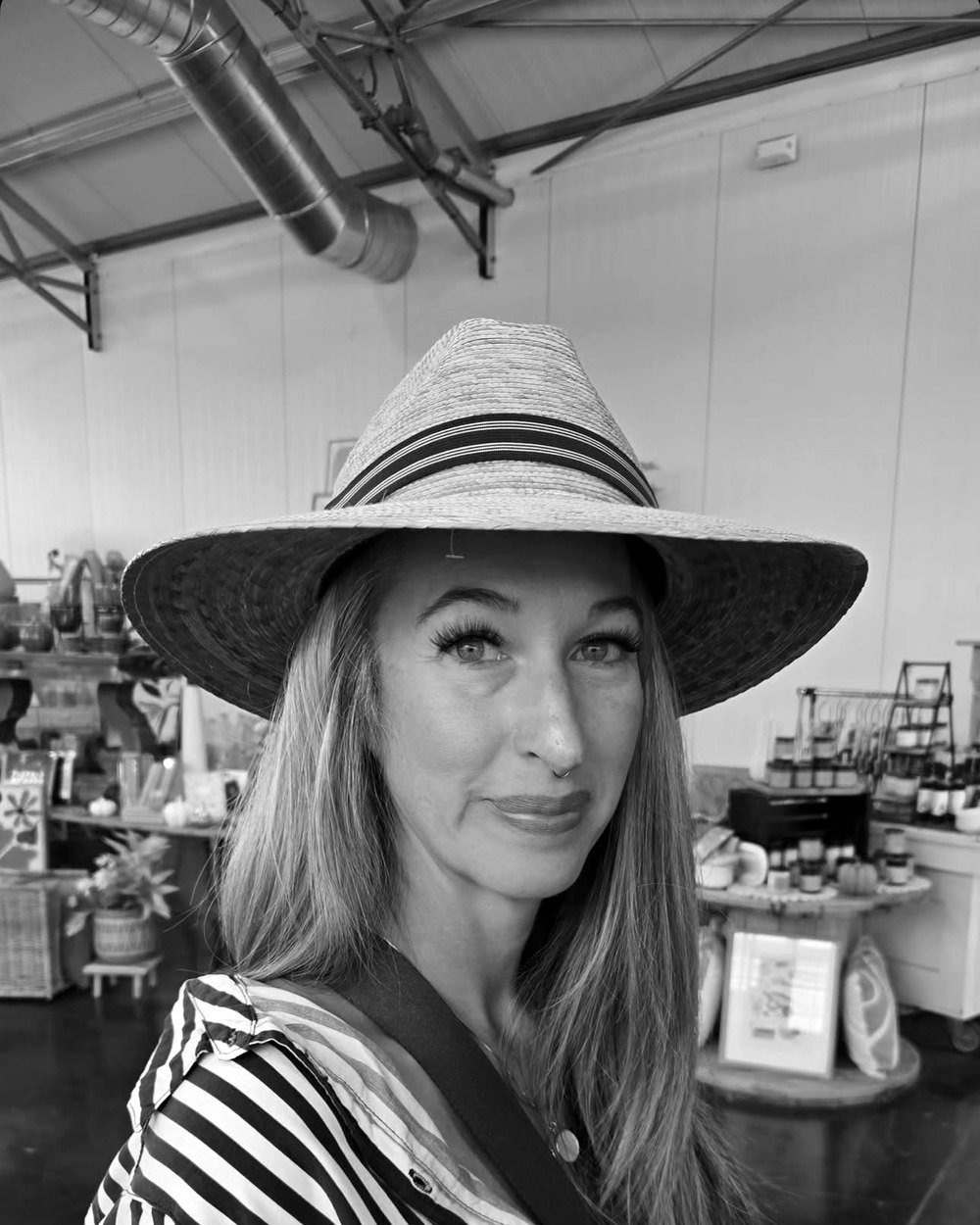
The afternoon before we spoke, Amanda Porter got up from her desk, went out to the yard, and sat down in an inflatable pool. She was wearing a sun hat. She had a crossword puzzle book with her.
“I’m embracing my eighty-five-year-old self already,” she says, delighted about it.
She has a theory about why she needs this.
“I’m a house plant. I need a little bit of sunlight or I just can’t.”
Hold that image, because the woman in the baby pool spent the better part of two decades inside large corporations, on the front line of their worst weeks. She laid off hundreds of people. She rewrote what other people got paid. She was the one sent in after a decision had already been made by somebody else, to sit across a table and say it out loud.
Then, eighteen months ago, a company did it to her. It was amicable. She knows how these things go.
II.
Root and Branch is a fractional HR partner. Two founders, no office, aimed at small and mid-size companies going through growth or transformation: the ones scaling fast, navigating a transition, or reshaping culture for what’s next.
Amanda co-founded it with Kaylee Tanner, and where they met matters.
“My co-founder and I met and bonded in the trenches of a big corporate merge and spin — big, big, big. At the time it was one of the biggest mergers and divestitures ever. Bonded over some awful, awful hard work.”
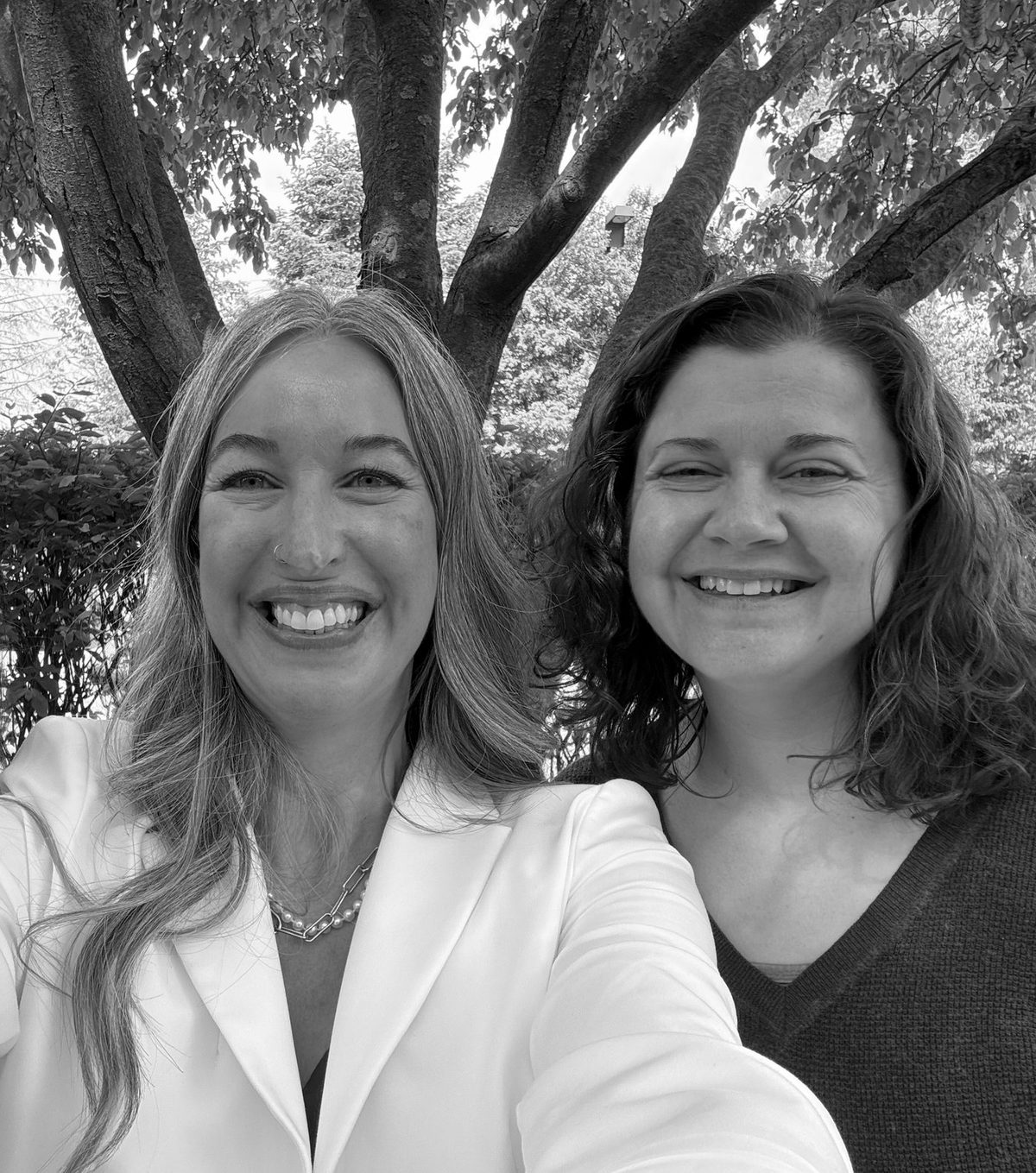
Somewhere in the middle of that they said the thing colleagues say and almost never do. Wouldn’t it be fun if someday we did our own thing?
They both left that organization to do other things. And then they both found themselves without roles, due to eliminations, at roughly the same time.
And said: “hey, let’s do this.”
Ask how the year and a half has gone and she does not choose one adjective.
“It’s been hard and amazing.”
III.
She grew up in big corporate and she says the early part was fun. Human resources is a female-dominated profession, so unlike a lot of the women in this series she was not the only one in the room. That was never her complaint.
Her complaint was the dancing.
“Why don’t people just say what they mean? We’re in a meeting and to me it’s so obvious what the problem is, or it’s so obvious who the issue is, but now we’re dancing around it.” Companies doing elaborate work to protect people who were plainly not performing. Promotions handed to people she could not account for.
“I probably have strong justice sensitivity,” she offers, which is the most HR sentence anyone has ever used to describe a temperament.
And there was a price for saying it.
“When you ask those types of questions, you’re the naughty one. You’re causing problems.”
Meanwhile the work itself was the hardest work the company had. Layoffs — hundreds of people. And the projects nobody volunteers for, including the one she still cannot hear the word for.
“I hate the word harmonize. I have a lot of words that are triggering to me now. I can’t stand corporate buzz words that often result in emotional and hard, even if necessary, people impacts.”
Then the mechanism that turns competence into a sentence, which is the same mechanism half the women in this series describe from inside completely different industries.
“Because we were good at it, and we were willing to do it, we just got more and more and more and more.”
Other people, she noticed, seemed to get out of it.
“It just felt like we were kind of being used at times.”
IV.
To understand why she stayed so long, and worked so hard, you have to go back a long way.
“I came from very, very little. Growing up we were desperately poor, and the message was very much: well, it is what it is.” Not go spread your wings. Not work hard and you’ll get out. Just the reality, and the reality included never being able to go to college.
She went to college. She put herself through it, and then through graduate school.
The first ambition is worth quoting because of how honest she is about it. “First it was: I’m going to get a PhD simply so I have bragging rights of being called doctor.” Then she thought better of it, went into corporate instead, and set about climbing. Promotions. The title. The money.
And underneath all of it, one engine.
“In the back of my mind — or probably not consciously — it was to prove I’m enough.”
V.
Amanda grew up in a religious cult until she was about ten. She raises it herself, unprompted, and says plainly that she is very open about it.
It was where the family went to church and where she went to school. They did not live there but she says they practically did. They were there all the time.
Then it came apart, and the household came apart with it, in a way she only understood the shape of years later.
What it left behind was a house with no adult free to run it. Amanda was ten. Her brother was three. Her mother went out to work. Her father left and never looked back.
“So yeah, it was hard. It was lonely.”
“Felt very loved. But also just alone.”
Middle school was horrible. She says that flatly and does not elaborate.
Then in high school, two people did something for her that she still describes as a miracle, twenty-five years on. Somebody looked at her and said: you have talent, you can take all the dance lessons you want and I will pay for them. A music teacher heard her sing and said, essentially, I want you to do this and I will do everything necessary to help you do it.
“That gave me a good place where I felt good. Music really was where I started to find some compliments, and like — I feel good here.”
She had also just moved from the cult’s school into the public school system, which she describes without any self-pity at all.
“I was just a total alien. And I think I felt like that my whole life. Except now I’m just like — it’s okay. I feel good about it.”
“I talk with the little me a lot.”
VI.
Her husband is Jay. They joke that they have been together since they were toddlers; in fact they met in high school, where he was also in music.
Their first interaction is the best origin story in this series. She had dated a friend of his, and they had broken up.
“My first interaction with Jay was him calling me Satan to my face.”
Her verdict at the time: what a jerk. I do not like this guy.
Then they were both put in the same All-State quartet, started spending time together, and she revised the assessment down to okay, I guess you’re not that bad. They never broke up. She was twenty when they married.
“Couldn’t even legally drink at my own wedding, which is insane.”
She does not recommend it, and she is precise about why. Not because it went wrong — she says they are in an excellent spot — but because of what it requires.
“You don’t know who the hell you are yet. You’re both going to change. To be able to do that and still continue to choose this new person, this new old person in front of you, is some of the hardest work I’ve ever done.”
They had not planned on children. “We came from a lot of garbage and baggage,” she says, and there was a CEO chair she intended to be sitting in. Seven or eight years into the marriage she wanted a family after all. A daughter came, and then a son.
Her daughter has always, she says, been extraordinarily inclusive and kind with people. Her son is, in the tradition of second children everywhere, kind but spicier.
“I really don’t feel like I did anything. They just were born that way.”
VII.
Here is the part of the business that is not on the website.
Amanda has ADHD. What that looks like in practice, in her account, is not a deficit of attention but a wildly uneven supply of it.
“I will have days of insane productivity. Like I can pump three weeks’ worth of stuff out in a day. But then I’m wrecked. Then I’m just absolutely wrecked for two days or three days or whatever it is.”
Inside a corporation, that is a performance conversation. Inside a two-person firm that she owns, it is a schedule.
“What this has allowed us to do is honor that. We don’t have to shame ourselves. You’re having a brain-dead day? Awesome. Really — go take a nap.”
Or, as she demonstrated the day before this interview, go sit in a baby pool.
VIII.
Ask what she wishes she had known sooner and she declines the premise, which is characteristic.
“Even the things that were terrible prepared me for what I’m doing now.”
What did change is the thing that had been running underneath the whole career. The engine that said prove I’m enough has been replaced by something quieter and considerably more useful.
“No — I’m really capable. And I can figure out hard things.”
“I can be met with things I’ve never seen before, but I have enough resources or ability to figure it out. There’s been moments where it’s been really scary, but so many more moments of: oh, okay. Well, we’re going to figure it out.”
And then, unprompted, she does something almost nobody in this series has done. She names her own luck.
“I feel very lucky that this happened at a time when, if I’m not making money for a little bit, we weren’t on the cusp of financial stress. The financial pressure is super real. I feel very privileged that I at least had some time and space before that became super scary.”
Which sets up what she and Kaylee are and are not doing.
“We are not in this to — I’m going to make fifty million dollars.”
What they are in it for: enough for both families to be comfortable and meet their needs, and a lot of flexibility, for their kids and — she is specific about this being new — for themselves, for the first time.
IX.
Her daughter is going into her junior year, so the conversation about what comes next has started. Amanda’s version of that conversation is unlike anyone else’s in this series.
“I think many people are preparing for a world that probably isn’t going to be there, or is going to be very, very different.” The degree that guarantees the job. The path that runs in one direction. She watches people arrive at the end of it holding a credential and no offer.
So she has reframed the whole thing, and the reframe is generous.
“What we have today — it sucks. And you guys get to help build something different.”
College is supported if she wants it. But: “that’s likely not what you’re going to do forever. So don’t pressure yourself into — oh my gosh, I’ve got to figure out what I’m going to do forever. No, you’re not.” Pick something you actually want to learn more about. Start there. The experiences will move you and that is the point.
“Anytime you can learn something about yourself, it is a win.”
Ride the waves. Have a plan. Work hard. Help other people. And a piece of parental insurance that tells you a great deal about a woman who was ten years old with a three-year-old brother and no money in the house: if the economy fails and you cannot afford to live on your own, we will get some land, and you can live in a corner of it.
Asked whether she would want her daughter to be an entrepreneur, Amanda does not wait for the end of the question.
“Hell yeah.”
“Because what most people are doing — I don’t think it’s working. It certainly wasn’t working for me.”
X.
Near the end she was asked what she would say to the little version of herself, at the worst of it. She took a moment with it.
“The world is going to try so hard to convince you you’re not enough. And it’s all wrong. You were enough. You are enough.”
Then she kept going, and this is the part worth the whole interview.
“And also — you’re going to help a lot of people. And you’re going to be kind of funny. You’re going to be really creative. And you’re going to bring so much whimsy to the world.”
Then, quietly, the reason that sentence had to be said at all:
“Because I was just such a shell. Such a little shell of a human.”
The first thing Amanda Porter told me, the first time we met, was that she is a truth teller. She offered it again at the top of this interview, as a warning and a credential at the same time.
“That’s part of why I didn’t feel like I belonged in corporate.”
Consider what that means about the last twenty years. She was employed, repeatedly and at increasing seniority, by organizations that needed somebody willing to say the hard thing out loud, and those same organizations had a name for her when she said it. She was the naughty one. She was causing problems. Then they handed her the layoffs, because she was good at it and she was willing.
She now owns a company whose entire product is telling small companies the truth about their people. The trait that made her a problem is the invoice.
The little girl who escaped the cult, who felt like an alien, who was ten years old with a three-year-old to look after, who found the first place she felt good inside a song, grew up to be the person in the room brave enough to say the thing everybody can already see.
Nobody promoted her for that. She had to go and build the room.
And the baby pool is not a break from the work. It is what the work was for.
Freedom looks like
“I have options. I can choose my path, my time, my destiny, my focus.”
Freedom for me is self-efficacy. It’s choice. Amanda Porter · Root and BranchFree · Every Friday
The Bellwether Brief, free
One email a week with the week’s stories.
Sources: Gusto, 2025 and 2026 New Business Formation Reports · US Census Bureau, Business Formation Statistics, August 2026 · Molinsky & Margolis, Academy of Management Review 30(2), 2005 · Sage, The Changing Face of HR, reported by SHRM · Epic Research, 2023, updated 2024 · Ashinoff & Abu-Akel, Psychological Research 85(1), 2021 · Tran, Wiklund, Antshel, Jhawar & Montgomery, Entrepreneurship Theory and Practice, 2026 · Airoldi, Revelio Labs, March 2025.