Ask Me That Again in Ten Years
A hiring manager once told Laura Cole her degree made no sense. Twenty years of being right early later, she left a six-figure job, moved to Spain and opened the agency she should have opened two decades ago.

I.
The interview happened around 2010. She was going for a marketing director job, and the woman across the table had read her transcript and could not make it add up.
Laura had gone back to school in her thirties and come out with a degree in IT and development.
“She said, why did you get an IT and development degree? That makes no sense. You’re a marketer. Why wouldn’t you get a marketing degree?”
Laura’s answer was short, and she has been collecting on it ever since.
“And I said, ask me that again in ten years.”
Here is what ten years did. Open any marketing job listing now.
“Job listings all the time are for graphic designers who can develop in WordPress. That’s two different skill sets. That’s two totally different.”
“But I was smart enough.”
In her account, seeing things early is the actual product she sells.
“That’s something that I actually say to clients when I’m onboarding them. I get things way before anybody else is talking about them.”
II.
Explanations for this have been offered to her over the years, and she enjoys listing them.
“If you ask my religious friends, I’m a prophet, God’s downloading these things. If you ask other people, you’re a truth teller, you’re psychic.”
“But if you ask TikTok, I’m a witch. So I don’t know what I am.”
Her own explanation is considerably duller and much more useful.
“It’s not psychic. It’s not witchcraft. It’s not prophecy. It’s just understanding patterns and being able to think what other people are thinking, which is super valuable in marketing, and just knowing what the customer is going to be doing.”
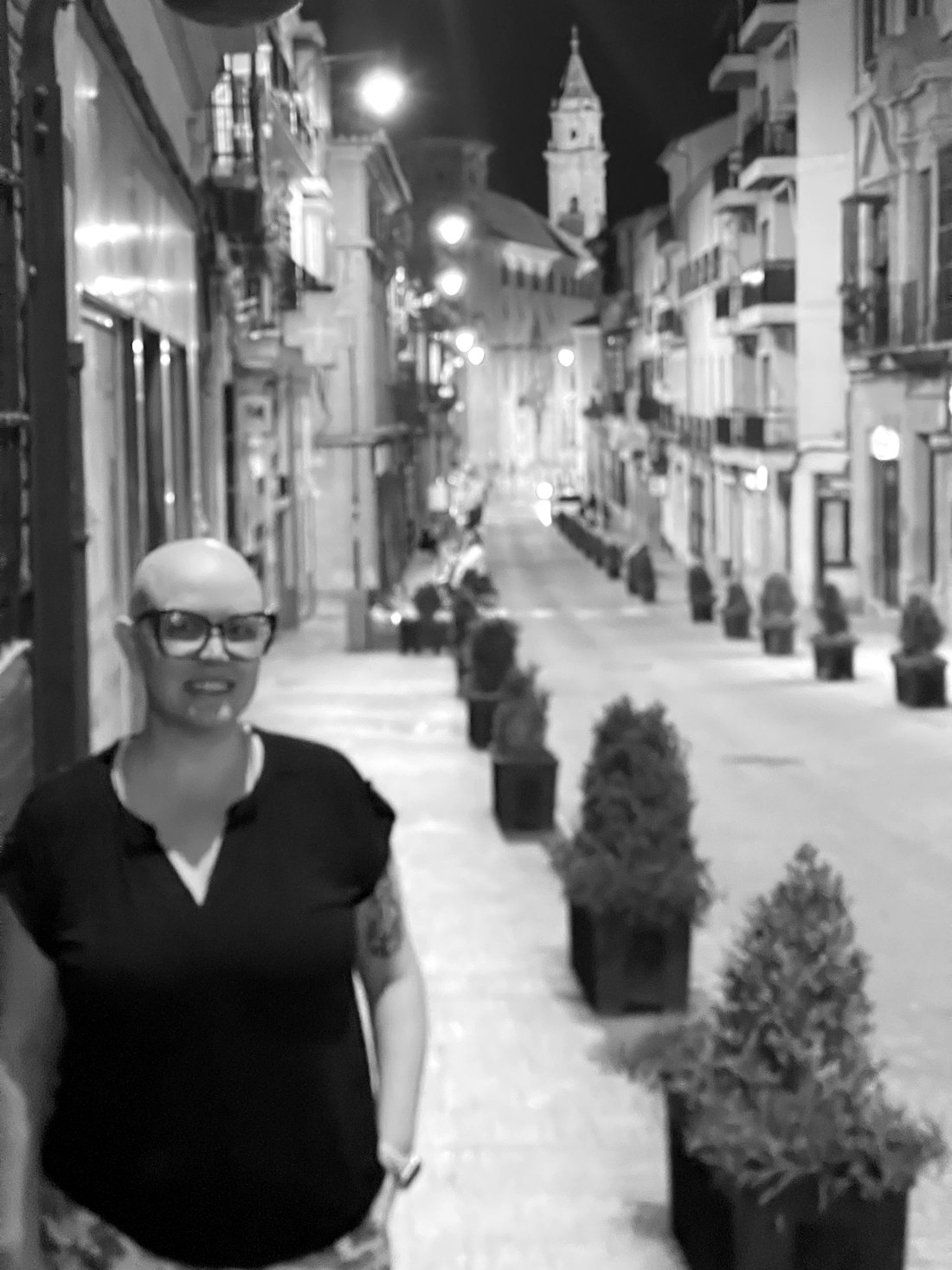
The largest bet she has placed on it was personal. In November 2024, the day after the US election, she turned to her husband and told him they needed to leave the country. She laid out what she expected to happen next, and in what order.
They moved to Europe.
“And every time something new happens, either my kids or me and my husband look at each other and we’re like, yep, there it is.”
Whatever you make of the call, note the mechanism. She describes a sequence, stated in advance and then checked against events.
III.
The pattern started early, and the first time she bet on it she was a receptionist.
Early twenties, a gospel music company. She watched the radio promotion job and formed a view about it.
“I said, I feel like I’ll be good at marketing. If you’ll let me be the radio promoter, I promise you I will win the industry award in my first year doing it.”
“And he was like, no.”
“I said, just let me try. I think I’m good at this.”
She told him that in August. By April she had been nominated. Later that year she won, the only independent radio promoter not attached to a record company to take it.
The method she describes now was a system before anyone had a name for it.
“I joke that if Al Gore invented the internet, I may have invented social media, because it was Excel spreadsheets. But I was keeping up with things they told me. So that when I would call the DJ back: hey John, how was your daughter’s wedding?”
A spreadsheet of what people had told her about their lives, so that the second call was a conversation.
“So I just used people’s stories to be a radio promoter. And I won the industry award.”
Twenty-plus years followed, at companies she describes as running from “million billion dollar” down to small business. Then, in October 2025, she quit and opened her own.
IV.
There were three catalysts, and she counts them out.
The first is what she actually loves, which she describes with no strategic gloss at all.
“I’m a true creative. I have the brain to do development. I code like a boss. I can find coding breaks as one would do a word search. But my true love is the beauty of creative work. I want to play with colors and write words.”
The job she was in had drifted entirely away from that.
“I was doing more tech and CRM and no marketing, and I was very unhappy, and I was begging to do marketing. And it was just, we don’t need it, we need this. I described it as me ‘dying on the vine.’”
The second is a rule she has run her whole career on, and it is unusually clean.
“I usually leave a job when I feel like there’s nothing left for me to learn or teach.”
“When I get to the place where I’m like, okay, I’ve got them where they need to be, kind of like Mary Poppins blowing in or in the movie Chocolat, blows in, following that north wind.”
“When I can’t learn any more myself, and I quit growing, then I quit growing them.”
The third catalyst is the one with casualties, and she has the receipts.
“A lot of times my best ideas get put on the cutting room floor for some of the stupidest reasons.”
Exhibit one. She was given a hundred thousand dollars for a trade show booth and produced something the trade show organizers themselves called diabolical, which in that industry is a compliment. It came in at eighty.
“And then he says, really, we only want to spend fifteen. I just wanted to see what y’all could do.”
They built the usual booth.
“All he did was knock every bit of creativity out of the room. We were so done.”
Exhibit two is smaller and somehow worse. She proposed building separate landing pages for the company’s ads. The CEO said nobody else was doing that, and then did not approve it.
Her response to him: “Exactly, and that’s why we should do it.”
So she left, and she built the rule into her own contracts.
“I have rules in place with clients. If they’re always wanting to use their own ideas, they don’t need me, and I’ll terminate that contract on good terms. I think, if you already know what needs to be done or what will be successful, you’re wasting your money on paying me.”
And then the line that is the whole reason people do this.
“And it puts money in my pocket, and not somebody else’s.”
V.
There is one thing about Laura that you notice immediately and that she rarely remembers to explain.
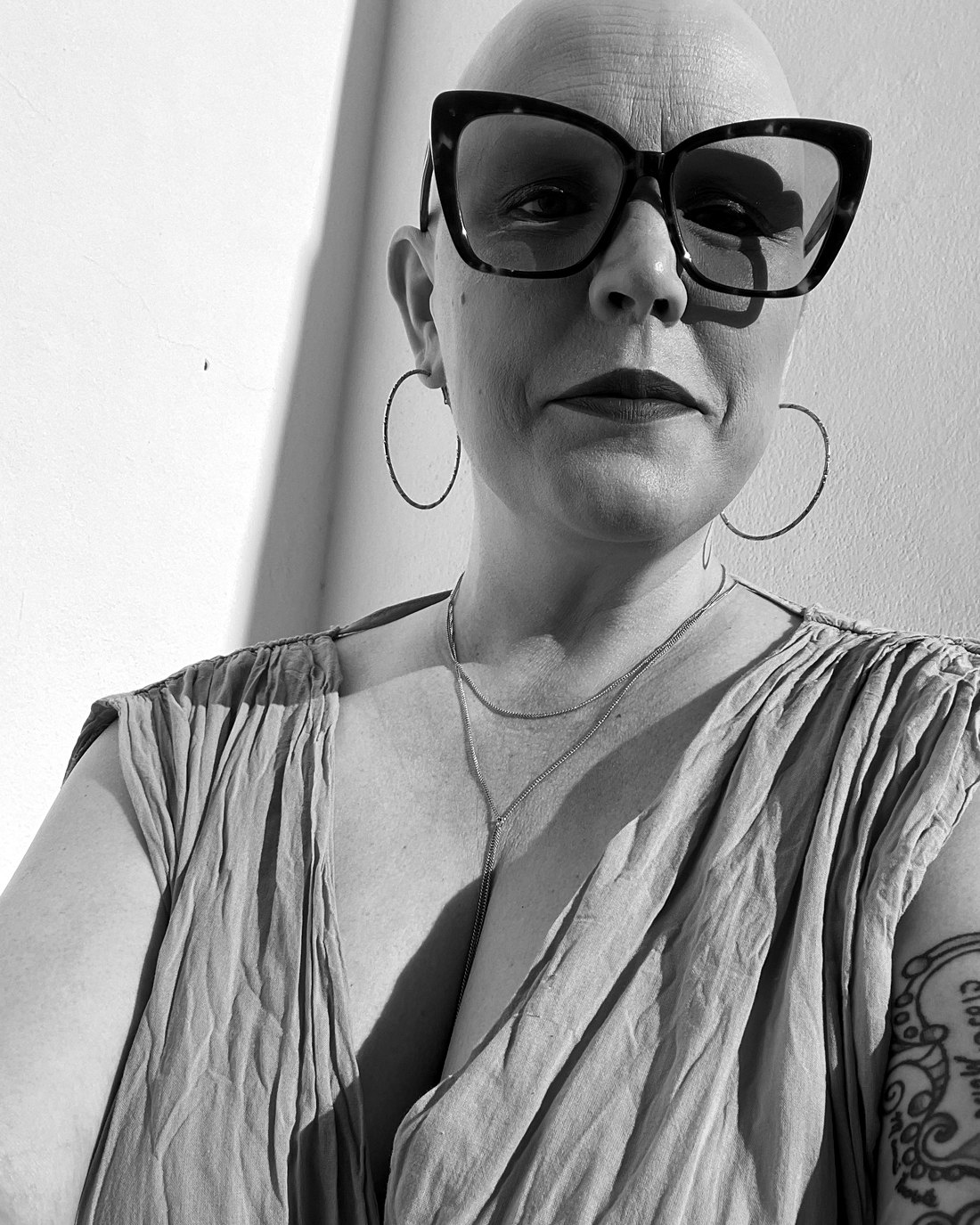
Laura is bald. She has alopecia universalis and lost all of her hair when she was nine years old. It never grew back. She wore wigs until her mid-thirties, when she decided her comfort and confidence had to come first.
“I wore wigs because it made everyone else comfortable; not for me.”
It was at that same time that she began going professionally by the brand The Bald Marketer.
Asked whether she has always been this confident, she gets ahead of the answer.
“I jokingly tell people I’m extremely arrogant, but in a funny way, not in an offensive way.”
Then she starts the real answer, stops, and restarts it, because she can hear how it will read.
“For nearly twenty years I’ve been told, oh my god, you’re a genius. How did you think of that?” Laughing, she adds: “Some folks would get upset if I called myself a genius.”
The habit started with a very early piece of pattern recognition about herself.
“If you tell me we need a tagline for XYZ, I’m going to come up with five of the best taglines they’ve ever heard. My tagline is going to get picked.”
“So because of that, I learned really quick to speak up and tell my idea, because I knew my ideas would be good.”
It has a downstream cost she calls, accurately, a monster situation: she has become the person everyone texts.
“People who work in other marketing agencies that used to work for me will text me: hey, I’m supposed to have a tagline. Or, what can I do with this graphic? And I help them, and it’s super easy to me.”
Then the line that will make a certain kind of reader sit up, because it runs exactly opposite to what everyone else says.
“My therapist said I had no impostor syndrome at all.”
Her therapist’s reasoning, as she reports it, is the part worth keeping: she says the idea is good and says she can do the thing because she has the data to back it.
“So I’m built different, and I acknowledge it. There’s a lot of things I can’t do. But I also don’t tell people I can do things that I can’t. So I’m able to deliver on the things that I say.”
Asked whether all that confidence created friction in teams, she says almost none: one former assistant, once, and nothing since worth the word animosity.
And then, without being asked, she supplies the exception.
“I had one idea stolen by a man.”
It was early, around the radio promoter era.
“And I was like, yeah, that’s never going to happen again.”
What she did about it is the most quietly impressive thing in this interview. She went the other way, in writing, on a wall.
“I used to print out a sign and put it in my offices that says: a good idea is a good idea. It doesn’t have to be mine.”
People asked what it meant.
“I said, I give my staff credit for their ideas, because I feel like being the manager of them, I’m credited for discovering them and pulling that out of them.”
And the second half, which is what turns it into a policy:
“But then again, I also expect to get credit for my own ideas.”
“A good idea is a good idea. It doesn’t have to be mine.”
VI.
The agency is less than a year old, and she is refreshingly unwilling to pretend otherwise.
“One of the things that I’ve definitely learned is it’s going to take some money to make some money, and growth can be slow.”
The old way was easier, and she knows exactly why.
“In the past, especially when I did this as a side gig or freelance, I’d send somebody an email, let’s talk, I’d get them on a phone call and they’re sold. It was easy.”
The new positioning cuts both ways, and she says so.
“My brand comes off as very high-end, which is good and bad. Now that I’m doing a different service, I need people who can pay different money.”
She is direct about where that leaves her.
“Even though it hasn’t been profitable, it will be profitable, because I’m learning things to do that, frankly, my peer agencies aren’t doing.”
What she means specifically is answer engine optimization, building for the systems that answer questions directly, and raw speed. She got her page load under two seconds and mentions it the way other people mention a marathon time.
The offer she has built is genuinely unusual for a shop this size, and it is the IT degree finally cashing out.
“I’m doing all my own web dev, and I offer a unique offering in that I’m a creative designer and I can customize their CRM. They kind of get a whole tech, and branding, and design package.”
Because she owns the CRM outright, she can put the build into the contract and skip billing it as a separate project. And then the clause that tells you what kind of operator she is:
“They can even lease those things from me if they decide to leave my company as an agency.”
A one-woman agency that has pre-agreed the terms of its own break-up, in the client’s favor.
The daily reality is two modes, and she is clear which one she is tired of.
“I have days where all I do all day is sales and outreach, and then days of, okay, today is writing day, or today’s working on the website day.”
“I’m tired of only building these great systems for myself. I’m ready to do somebody else’s now.”
Her outreach has a voice, and the voice is doing work. She writes snarky cold emails, on purpose, and they open doors. The best result so far involved tracking down the head of creative at a luxury fashion house, a name she asked us not to print, sending one of them, and then watching the link statistics: he clicked twice, then shared it six times.
Nothing has come of it yet. She counts it anyway.
“Even if that never becomes anything, my website and my name was passed around,” she says of one of the most guarded creative departments in fashion. “That’s huge.”
“I get how to do outreach. I get branding and voice. When someone gets a cold email from me, they know it is really me, even if it is automated.”
VII.
The engine that runs all of this has a name, and she is entirely matter-of-fact about it.
“It served me throughout most of my career, because I could do fifty things at once. The dreaded line on a job listing, you’ve got to be able to pivot and go with it and change directions, all of those things that most people hate, I was really good at.”
Then two things arrived at once and took it away. The job that turned into full-time Salesforce development, staring at code all day. And, in the same stretch, the deaths of her mother and one of her closest friends.
“So I had no creativity in me from just sadness. And then that Salesforce stuff literally sucked the creativity out of me.”
She talked to her doctor and started medication for ADHD, and she reports the outcome without any of the usual hedging.
“Some people with ADHD get halfway done with a really good project and then abandon it. Or have a great idea that everybody tells them they need to do, and they go buy the domain, and then they get bored and it just sits there.”
“When I’m on medication, that doesn’t happen. I finish the task.”
And the reason she gives for staying on it goes well past productivity.
“It made me a better mom. It made me a better wife. So I’ll continue to be medicated, because it does serve me well.”
VIII.
She warns Bonnie before answering the question about home life.
“You’re gonna make women hate me right now.”
The comparison she is drawing is to a first marriage in which, as she puts it, everything she accomplished was credited to him, and she was made to feel that she couldn’t have done it without him.
Now there is Greg, an engineer, five years married, whose work did not transfer when they moved. So they divided it.
“We’ve made the decision that he’s going to take care of all the foreign stuff, our visa, paperwork, all that, take care of the dogs, take care of the house, do those things. And I’m going to work.”
Her name for the arrangement is delivered deadpan.
“I wouldn’t call him a stay-at-home husband, but I’m a kept woman.”
What that looks like in practice is smaller and better than the joke.
“I get so into working so hard sometimes that I forget to eat. I don’t stop. And so he and my son will either one of them at any given time say, okay, here’s some water, you need to drink it. Or, have you had anything to eat?”
He is also, she says, useful in a way an analytical husband is uniquely qualified to be: he asks whether the thing she said she would do got done.
“He’s really good for me as far as, hey, did you do XYZ? You’ve been talking about it.”
There are three grown children. One is in Spain with them; she is working on the other two. All of them were taught a creative skill early, from web design and development to writing and music, and all of them are being gently pushed toward the plunge she waited so long to take.
“I’m always sending them opportunities. Hey, here’s a freelance gig, take it. You wouldn’t have to work for three months if you did this.”
She understands why they hesitate. “Everything costs so much that it’s not practical to be their age and take that plunge. And I get it, and it’s scary.”
Then, mid-sentence, she works out why she pushes.
“It’s kind of like therapy. I just connected two dots. I think I push so much for them to do it so young because I don’t want them to be fifty and be like, this is what I should do.”
IX.
The advice she would give her younger self is three words long.
“You’re not stupid.”
It is a thing she heard a great deal growing up, and heard again in a first marriage. She reports it flatly, as a correction.
And then the regret, which is about time.
“I wish I had done this twenty years ago. If I’d have done this twenty years ago, with the ideas I had that won me that award, there’s no telling where I’d be right now.”
Twenty years is the exact distance between the radio promoter who called the award in advance and the woman now running her own creative and IT firm from Spain, and she is right that it is a long time. She is also, on the evidence of this interview, doing the thing at precisely the moment she was equipped to.
Look at what she built and it reads as a set of corrections.
She was told her degree made no sense, so she built a firm where the design and the code are the same person, which is the offer nobody her size can match. Her best ideas were killed by people who could not evaluate them, so she wrote a termination clause for clients who want to use their own. One idea was taken from her, so she made attribution a sign on a wall, in both directions. She spent her childhood being looked at and decided in her thirties to stop dressing for other people’s comfort. She was told for years that she was stupid, and now sells the thing she is unmistakably not.
Every one of those answers made something explicit.
The agency is not profitable yet, and she says so in the same breath as the page load time. That is what confidence sounds like when it carries weight. She is claiming she can see where it goes, which is the one claim she has a twenty-year record on.
Ask her again in ten years.
Freedom looks like
“Freedom for me looks like comfort.”
“Being comfortable with who I’m working with, who works with me, my family. Just comfort, period.”
She expanded it without being pushed: living comfortably, being financially comfortable, and having staff, someone eventually in place to replace her so she can step back and let the thing run.
Laura Cole · Laura Cole Creative