It’s My Chaos. I Own It.
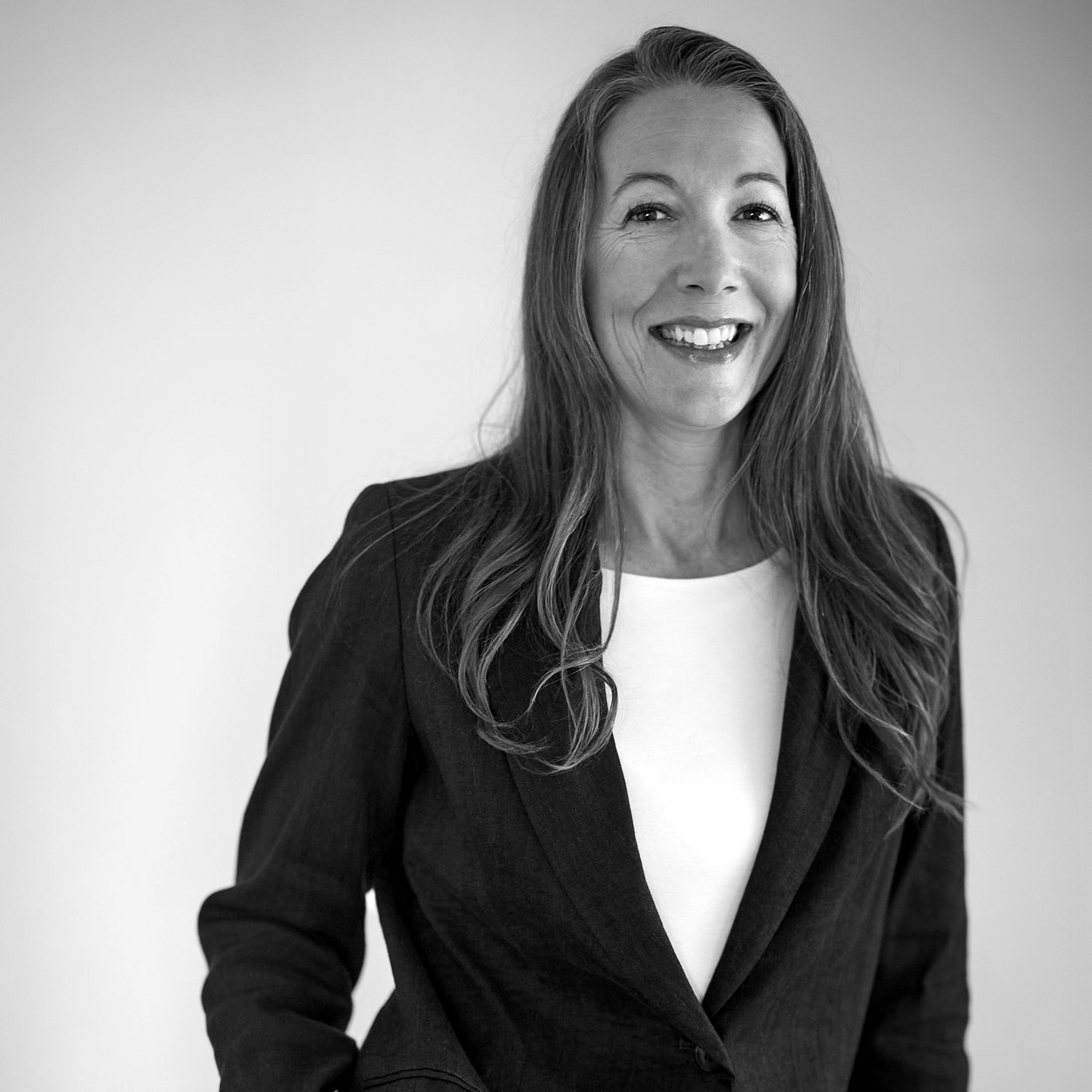
Monica Phillips was the one they handed the problems nobody else could solve, and then told she was doing it wrong. She left, built an agricultural consultancy, took the fractional CEO seats, and kept the border collies.
I.
There is a border collie under the desk. It is, in a way, the whole thesis.
Monica Phillips is asked to describe her business in sixty seconds and she starts by correcting the premise.
“There’s multiple businesses.”
At the core of Monica’s work is agriculture, the industry she grew up in and has spent her career helping move forward. Through AgriLuminate, powered by The Phillips Group, she runs an agricultural services firm that takes young companies and new technologies and gets them a foothold in an industry that is famously unkind to newcomers. She focuses on market intelligence, strategy, and go-to-market planning, helping agricultural companies understand their customers and identify paths to growth.
Then there is the second business, which she runs now though her husband Brad started it years ago: a nuisance wildlife control company operating in the Des Moines metro. Its method is the dogs.
“We use border collies to keep Canadian geese off of corporate properties in the metro area.”
They bred, raised and trained their own for years. They don’t anymore. They kept one (or three).
“Hence the border collie under my desk here.”
And then there are the fractional seats. She serves in a fractional leadership role with AgCall USA, which supports agricultural companies through field execution and temporary workforce solutions. Alongside these roles, she is CEO of TerraVox Ventures and acting CEO of AmplifyGreen. “Agriculture is the common thread,” she says. “Each role has a clear focus, and I’m deliberate about protecting the time, trust, and confidentiality each client deserves.”
II.
The goose management business deserves a paragraph on its own.
People assume it is a charming sideline. It is a real operating company solving a real and permanent problem.
Brad went into the military young and spent most of his adult life overseas, deployed. He came back to the United States from Iraq to a life that had to be reassembled from scratch.
“He came back from being overseas and deployed as a combat veteran and diplomatic security agent to a civilian world that did not translate. He needed to create his own job. And so that’s what he created, often against all odds.”
His brother, also a combat veteran, runs the day-to-day operations out in the metro. The dogs are trained for the work, including swimming. In this operation, water is part of their territory.
Monica’s experience is that trained border collies are the only deterrent that continues to work over time. The business provides ongoing management, with dogs trained to do the job and people who understand how to work them. That practical experience is central to the service Brad built.
Which is to say: a veteran who came home needing to invent his own job built a company on a nuisance that will still be there in thirty years, and staffed it with dogs bred for the purpose. It is one of the more elegant business models in this series.
III.
Before any of it, there was the corporate career, and it was a good one.
Agriculture, global strategy, marketing, increasing seniority, and a schedule that would be recognizable to anyone who has done it.
“When we met, I was working in the corporate world, on an airplane a significant amount of the time. And that just wasn’t sustainable for me.”
She uses a careful phrase for what happened next.
“So I stepped off of that ladder, or jungle gym, or whatever it was.”
Asked for the catalyst, she names a person.
“I honestly think a huge part of it for me was the support from Brad. He’s been a phenomenal partner and business mentor to me; and with his hard earned wisdom also a solid life mentor, he’s super supportive.”
And then the sentence that most women in this series arrive at eventually, by their own route.
“You hit that point where you’re rising and you’re climbing and you’re sacrificing things and yourself and your family, and at some point it was just like, at what cost.”
She is careful to date it, because the options were different then.
“Even generationally that was like fifteen years ago. So at that time, people didn’t work virtually and there just weren’t other good options out there. So I just said, okay, I’m just going to chart my own course here.”
Then, drily: “And it’s been a journey to get there.”
IV.
Asked whether there was one specific day she hit the wall, she says it is a great question.
Then she gives an answer that has almost nothing to do with hours.
“I loved what I did in the corporate world and what I accomplished, and a lot of the people that I worked with. But at some point you feel like, this world that we’re in, especially for women, there’s this box. Everybody’s supposed to fit in this box and there’s all these rules.”
Then the line that could be the title of the whole issue.
“And I do not fit in any box at all.”
She is specific about what that means in a room.
“I’m often the one asking the questions people are thinking but haven’t said out loud. I’m direct, and I’m willing to have the uncomfortable conversation because I can see what’s possible if we work through it together.”
And she is clear that this was, for a long time, an asset.
“I know that about myself and was able to leverage it in good ways through my career. But at some point that can become a detriment as well.”
So the choice, when it came, was between the career and the trait.
“I didn’t want to sacrifice my authenticity or the gifts I bring to the world. Part of that is being willing to ask difficult questions and have honest conversations, even when they’re uncomfortable. We can’t fix the problems or drive growth if we’re unwilling to have real conversations about them.”
She widens it out, unprompted.
“And I think as women oftentimes we are far too willing to give that up, and to not just own who we are.”
Her account of that is worth quoting at length, because it is the most precise description of the trap that anyone in this series has given.
“Because I was entrepreneurial and consultative and an outside of the box thinker, they gave me the business problems that other people couldn’t or wouldn’t solve. My perspective, you’re not going to fix things by doing things the same way you’ve been doing them for thirty years.”
“And then you come in and you’re the bad guy, because you’re suggesting, I see you want to triple the business, but that means you’re going to have to do these things differently. And not everybody wants to do those things in a comfy corporate environment.”
“So I was driving a lot of change. I was that person who was bringing the solutions that were uncomfortable. Some of the ripple effect from that was, it’s not the way we do things around here.”
She presents it as a cost she was paying knowingly.
“And I was great. I owned that change agent. That’s fine. But it also came at a cost, right? It’s exhausting to get up every day and feel like you’re hitting your head against the brick wall.”
V.
There was a day.
She had taken a new corporate role with the parent organization, joining a marketing team out east and working with the global business. She was there for orientation.
The night before, she had called home. The first litter of puppies for the goose management business was due.
“Brad was like, ‘Oh no, it’ll be a few days.’ And I said, ‘No. Weasel’s going to have her puppies tomorrow. I just know it.’”
A beat.
“I told him that. And she had her puppies tomorrow.”
She was at an orientation session for a job she had started, and she was not there for it.
“It was just this monumental moment that we were supposed to be experiencing together, and I wasn’t there for it. And it impacted me in a way that I can’t explain.”
“I had just had lunch with the Fortune 500 company’s CMO. I had a quote in The Wall Street Journal. For a small-town Iowa farm girl, I had made it. I was exactly where I’d worked so hard to be, until I stopped to ask whether it was still where I wanted to go.”
“I left training, went to the bathroom, and had a mild panic attack, though I didn’t recognize it as that at the time. I had to compose myself.”
What she did next is the part that separates this story from an inspirational one. She went back into the room.
“I went through training and delivered in that role for six months or so, but I was figuring out what my exit path was along the way.”
Six months of showing up to a job while quietly building the door. That is an operator making a decision and then executing it on a timeline.
“When I think about what that shift allowed, so much of it comes back to being present. The blessing of being a hands-on bonus mom and wife who was present. Making home cooked meals. Raising livestock, growing a garden, and being there for my family. Those things mattered to me, and I wanted room for them in my life.”
“It also made room for adventure. Family deer camp. Family trout camp. We spent a lot of time in our camper as a family enjoying the rhythms of life.”
“I still work hard. There are long days and seasons when the business needs a lot from me. But I’ve also been able to make room for experiences with my family that I wouldn’t trade. When we talk about the decision to leave, that’s a big part of the story: what it allowed me to say yes to.”
“I made people hundreds of millions of dollars, and thought, if I can help businesses make money, surely I can figure out how to support my family.”
VI.
Ask her to walk through an average day and she laughs at the word.
“Oh gosh. You know, there isn’t one. And I love that about this.”
“If I had to get up every day and do the same thing over and over again, that is not a life for me.”
She will concede the obvious about what she has built instead.
“I know it’s chaotic. Sometimes it feels chaotic.”
And then, in eleven words, the difference between her old life and this one:
“But it’s my chaos. I own it. I’m accountable for it. I get to create it.”
The mechanism she names is a shorter distance between deciding and doing.
“If I don’t like the way things are going, I just simply make a different decision five minutes from now. And you can change the trajectory.”
“Nobody’s telling me what I can and can’t do. There’s no we don’t say that here, we don’t do that here.”
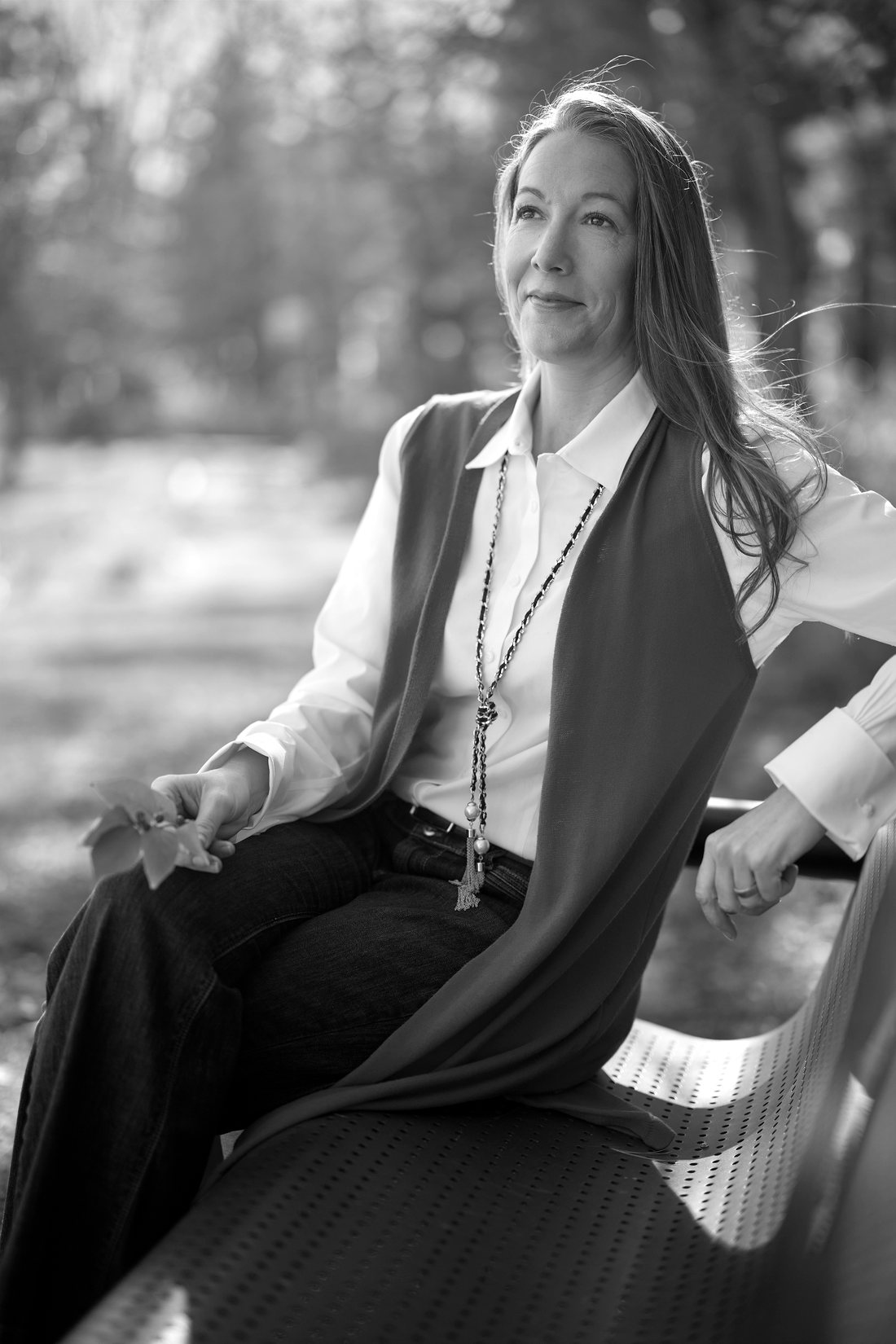
The actual day, for the record, is far from leisurely. She is awake by five. Some mornings she is at the desk by five-thirty to take two hours of strategic work while the coffee is still hot. Meetings might run three hours or seven. In delivery season it is twelve-hour days consistently, ten to fourteen on average.
“I try to step away for a walk at lunch, but I’m not always good at it. I just am always like, I can do one more thing. I can do one more thing.”
She has read The 4-Hour Workweek and would like a word with it.
“I would love for that to be some kind of reality, or a four-hour work day someday. But the reality is, I don’t find the balance day to day necessarily. I work in sprints, and that’s what works for me.”
The one non-negotiable:
“I always say a prayer before I get out of bed. That’s my thing. It’s my bookend. I have to start the day there and end the day there.”
Then coffee, and a rule about it.
“It’s fine working early. But don’t talk to me early if I haven’t had my coffee yet.”
VII.
Asked whether she carries the weight of the household, she declines the frame first.
Then she answers it honestly anyway, and she starts with the partnership.
“Brad’s great. I have a lot of support and help. Early on, we decided we were a team. We each contribute in different ways, and we work through what needs to be done together. He’s also the most capable man I’ve ever known and we enjoy being together.”
“But administratively, there’s a lot in our house. Between multiple businesses, transitions, medical challenges, just all the things, there’s always something to work through. That’s a part I tend to carry, within everything we manage as a team.”
Then, in three words, the thing women say about the load that is never quite true:
“Which is fine.”
Earlier in the same answer she had listed what actually fills the margins of a fourteen-hour day: running the household, work deliverables, planning meals, and for them, “a lot of doctor’s appointments and health concerns and just that whole side of our reality that maybe a lot of people don’t even think about.”
VIII.
Asked about the old tapes, the scripts that still run, she skips the tidy answer.
“I’m really good about just grinding through and making things happen and then getting on to the next thing. So I need to spend more time stepping back and saying, oh, wow.”
“And look at those wins and celebrate those things. I don’t do that very well. It’s just like, okay, great, on to the next thing.”
Then she finds the actual pattern, and it is a good deal sharper than a habit.
“I think for me the pattern is, because I’m capable, I feel obligated to carry everything.”
And the consequence, which she states without dressing it up:
“I am the first person to say, yes, I can do that, I can take on another thing. But I know that I’m sacrificing myself. And I will always sacrifice myself before anything else.”
“I don’t want to let anybody down, and I don’t want to not deliver, and I don’t want to not be supportive. And I also really want to leave the world better than I found it, even if it’s just my little corner.”
She has been working through that pattern intentionally for the past few years, learning that she can care about others without carrying everything herself.
“I take my responsibilities seriously. I want to follow through, support the people I work with, and protect the trust they place in me. My instinct is often to take on more so someone else doesn’t have to. But I’m learning that I can care deeply without making every challenge mine to solve.”
The work now is recognizing where support becomes taking on too much.
“Sometimes the best thing I can do is help. Sometimes it’s ask for help, I’m really working on that one.”
And then the correction she is trying to install:
“But also I think I have to realize, I’m just really responsible for myself. What’s going on in my four walls, that’s really the only thing I can impact.”
So the work now is delegation, or its harder cousin.
“I have to help others either carry the load, or find people who are willing to carry the load.”
IX.
They are empty nesters, and quality of life has become an increasingly deliberate priority.
They’ve made some significant personal transitions that may not make sense from the outside looking in.
“It’s all about quality of life, right? Life is short.”
Then she gives the calculation that produced the transitions, and it is the same one she made about the corporate job, applied to the rest of life.
“The cost of anything in life is the amount of energy that we expend for it. So we just wanted to be in a place where we could live our best life. And if it’s a year or five years or thirty years, we make the most of the time that we have.”
The question underneath all of it, the one that started the exit and then organized everything after, came from Brad, asked early, and she has been carrying it ever since.
“My husband asked me a question early on that was really helpful, and it was: at what cost? You know, you can keep doing these things, but at what cost?”
“And I don’t think we give ourselves permission to ask ourselves that enough.”
Read her three businesses next to each other and they stop looking like a scattered portfolio.
The consultancy exists because young agricultural companies have problems that established methods cannot solve, and she is the person who gets handed those. The goose management company exists because a veteran came home to a civilian job market that couldn’t relate to him, and a permanent nuisance nobody else wanted to solve. The fractional seats exist because organizations need someone who will walk in and ask the question nobody wants asked, and then leave before the room can domesticate her.
Each role draws on her willingness to question what could work better, and take responsibility for helping make it happen. Throughout her career, she was handed problems that demanded a different approach. She could see possibilities beyond the way things had always been done, and she was willing to name what would have to change to get there.
That can make a room uncomfortable. It can also give people a direction worth working toward.
They kept giving her the problems. She kept looking beyond them.
Eventually, she built a business around that ability: seeing what could come next and bringing people together to make it possible. She just stopped waiting for permission and built the business she needed.
The border collie under the desk is a colleague, from a business built by a man who had to invent his own job, run by a woman who had to invent hers. Neither of them was given a role that fit. So they bred the dogs, took the accounts, and built a life whose entire organizing principle is that nobody gets to tell them where the box is.
Freedom looks like
“Full ownership and accountability over the life that I create, how I spend my time, where I put my energy.”
“Being able to create my own reality, and not having it restricted by anyone else or anything else. I own it.”
It’s my chaos. I own it. Monica Phillips · AgriLuminateFree · Every Friday
The Bellwether Brief, free
One email a week with the week’s stories.
Disclosure: Bellwether’s publisher works with Sarnian Group, which backs TerraVox.
Sources: Holevinski, Curtis & Malecki, “Hazing of Canada geese is unlikely to reduce nuisance populations,” Human-Wildlife Conflicts 1(2), 2007 · USDA APHIS, The Use of Dogs and Other Animals in Wildlife Damage Management, WS Risk Assessment · US Fish and Wildlife Service, Resident Canada Goose Environmental Impact Statement and Waterfowl Population Status 2025 · Rundle, Revenson & Friedman, “Business Travel and Behavioral and Mental Health,” Journal of Occupational and Environmental Medicine 60(7), 2018 · Williams & Tiedens, “The Subtle Suspension of Backlash: A Meta-Analysis,” Psychological Bulletin 142(2), 2016 · Daminger, “The Cognitive Dimension of Household Labor,” American Sociological Review 84(4), 2019 · Weeks, Kowalewska & Ruppanner, Socius 11, 2025 · Babcock, Recalde, Vesterlund & Weingart, American Economic Review 107(3), 2017.