The Answer Was in the Room
Iowa Startup Week started with a skeptic asking why anyone would build a company in Iowa. Four days, more than 500 builders and backers and one $25,000 pitch competition later, the founders had answered him.
I.
Before there was an Iowa Startup Week, there was a room at West End Architectural Salvage, a group of volunteers and one hard question.
Jon Lensing asked it. His company, OpenLoop, is one of the few unicorns to come out of Des Moines, and he wanted to know why Iowa was a good place to build a company when there were so many reasons to go to the coast. Kaylee Williams, the week’s founding director, told Bellwether in September that his objection gave the event part of its purpose. (Her story is here.)
On Monday, September 28, OpenLoop hosted the opening reception.
The first Iowa Startup Week ran through Thursday, October 1, in Des Moines. More than 500 builders, backers and innovators came. One hundred speakers from across the Midwest took the stage over four days. The team had set out to sell 200 tickets.
On the last night, the region’s founders took the stage and made the case themselves.
II.
In August, 200 startups applied to pitch in the Best of the Midwest competition. The judges chose five companies in each of six industries, which made 30 semifinalists.
On Wednesday the 30 pitched at the Buyer’s Club Showcase, to a room the organizers say held more than 50 investment groups. They also say countless conversations happened in the wings, and that is usually where the real work of a week like this gets done.
Six went through. Their names were announced live on Thursday night at Hoyt Sherman Place, the historic hall Kaylee had said they would need to fill.
Each had already risen to the top of its category to get there. Jack Kilian’s Poultry Patrol started as a robot for chasing geese. Now his robots roll through turkey barns and keep the birds moving, and Axios reported before the week that turkeys raised with them gained about two and a half pounds more and survived at higher rates.
III.
The night opened with dancers. Danza Folklórica del Oeste performed Mexican folkloric dance, and the company behind it was founded and is run by a teenage entrepreneur, Sophea Munguía.
Then Dave Keith, the CEO of Wellabe, gave what the organizers called his seven-floor elevator pitch. His message, as they summed it up afterward: embrace the journey, because every step prepares you for the next opportunity, and opportunity rewards the people willing to keep rising.
Then the six pitched.
The winner was Pani Clean.
Pani Clean, from Coralville, turns nitrate pollution into ammonia. It takes the nitrate waste collected by ion-exchange plants and industry and converts it back into ammonia that can go to farms as fertilizer, and possibly one day become clean fuel. It has been testing the technology at Iowa City’s wastewater treatment plant, and last December the Iowa Economic Development Authority gave it a $50,000 loan.
The idea goes back about ten years, Joun Lee has told reporters, to a trip to India and the sight of children playing in contaminated water. Lee developed the technology at the University of Iowa.
On Thursday it was named the Best of the Midwest, with $25,000 and in-kind support services.
A company that pulls nitrate out of water and sends it back to the farm as fertilizer is about as Iowa an answer as there is.
IV.
Before the week, Bellwether put the same handful of questions to founders in the competition. Their answers explain a good deal about the room.
Dr. Maggie Koos is a physician. She built her company because of something she saw at work.
“During the height of the COVID-19 pandemic, I repeatedly witnessed the isolation gowns we relied on, continually slipping down, sagging, or gaping open at the chest during routine clinical movement,” she wrote.
“This wasn’t just a matter of discomfort — this structural shifting left healthcare workers exposed, increasing the risk of spreading healthcare-associated infections.”

She took the defect to one of the largest PPE distributors in the world. An executive there, she says, dismissed it on the spot.
“Everyone knows these gowns don’t work the way they’re supposed to. Nobody cares.”
“As a physician, I knew that statement was fundamentally false,” she wrote. “Healthcare workers and our patients deserved better.” She walked out of that conversation determined to engineer a fix herself, and that was the start of Koos Medical Innovations.
The Koos Gown is a patented design, engineered by a physician to solve the exact flaws she watched. “By ensuring continuous, full-body coverage during active movement, it delivers superior barrier protection for patients while seamlessly improving nursing workflow through its quick, easy-to-don design.”
She came to Best of the Midwest for the room. She called it “a fantastic opportunity to stand alongside the region’s most ambitious innovators and engage directly with the investors, mentors, and partners who champion the Midwestern startup ecosystem.”
And, she added, “to win the pitch contest!”
She made the final six.
V.
Russel Karim spent years working directly with brands, suppliers and manufacturers, and he kept running into the same problem. “Launching a physical product was unnecessarily complicated,” he wrote.
“A business had to coordinate designers, ecommerce tools, suppliers, factories, decorators, fulfillment providers, and logistics — often through emails, spreadsheets, and WhatsApp.”
He built Dhakai.com first, to make sourcing simpler, and then “realized sourcing was only one piece of a much larger problem.” The bigger opportunity was “to automate the entire journey from idea to product to delivery.”
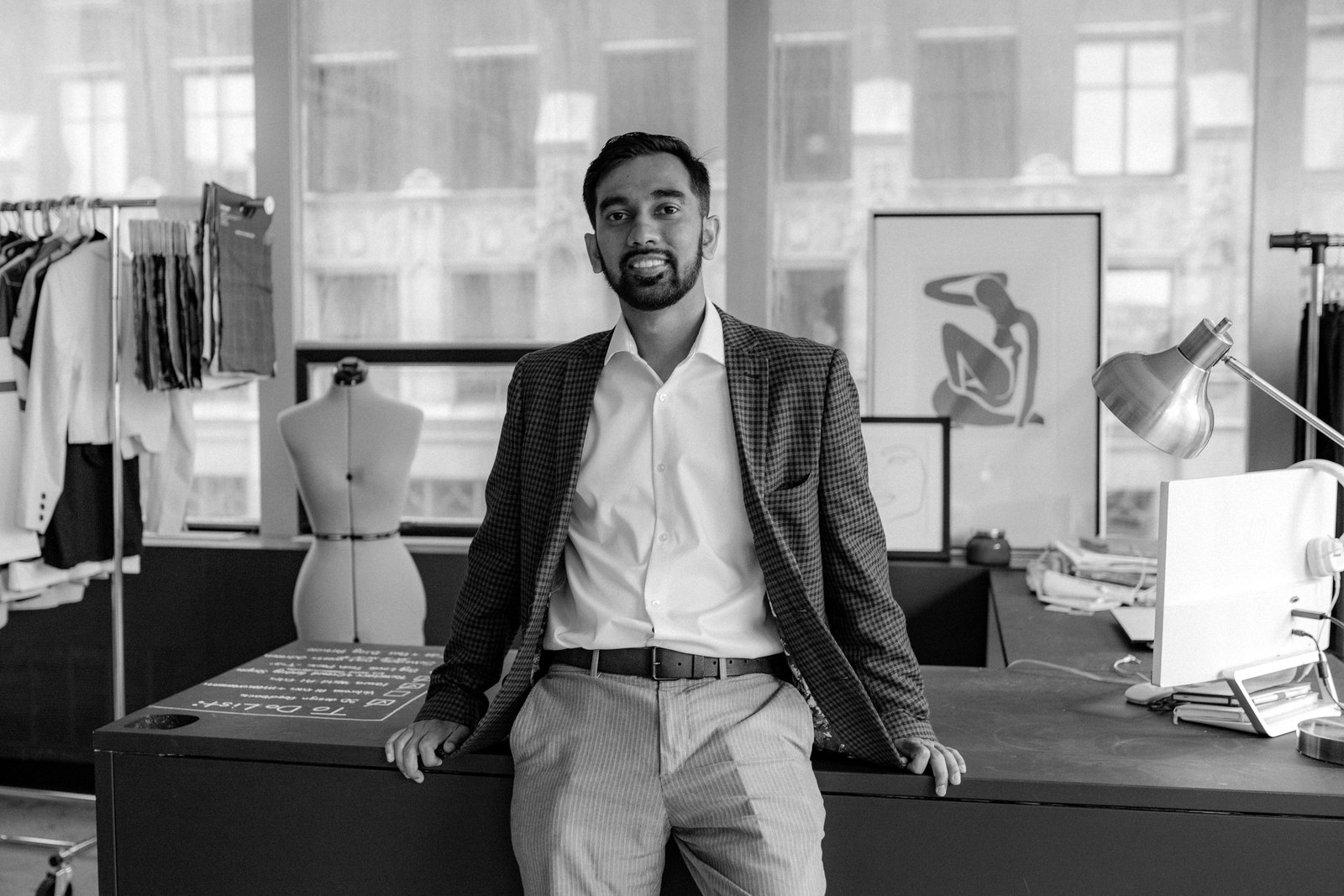
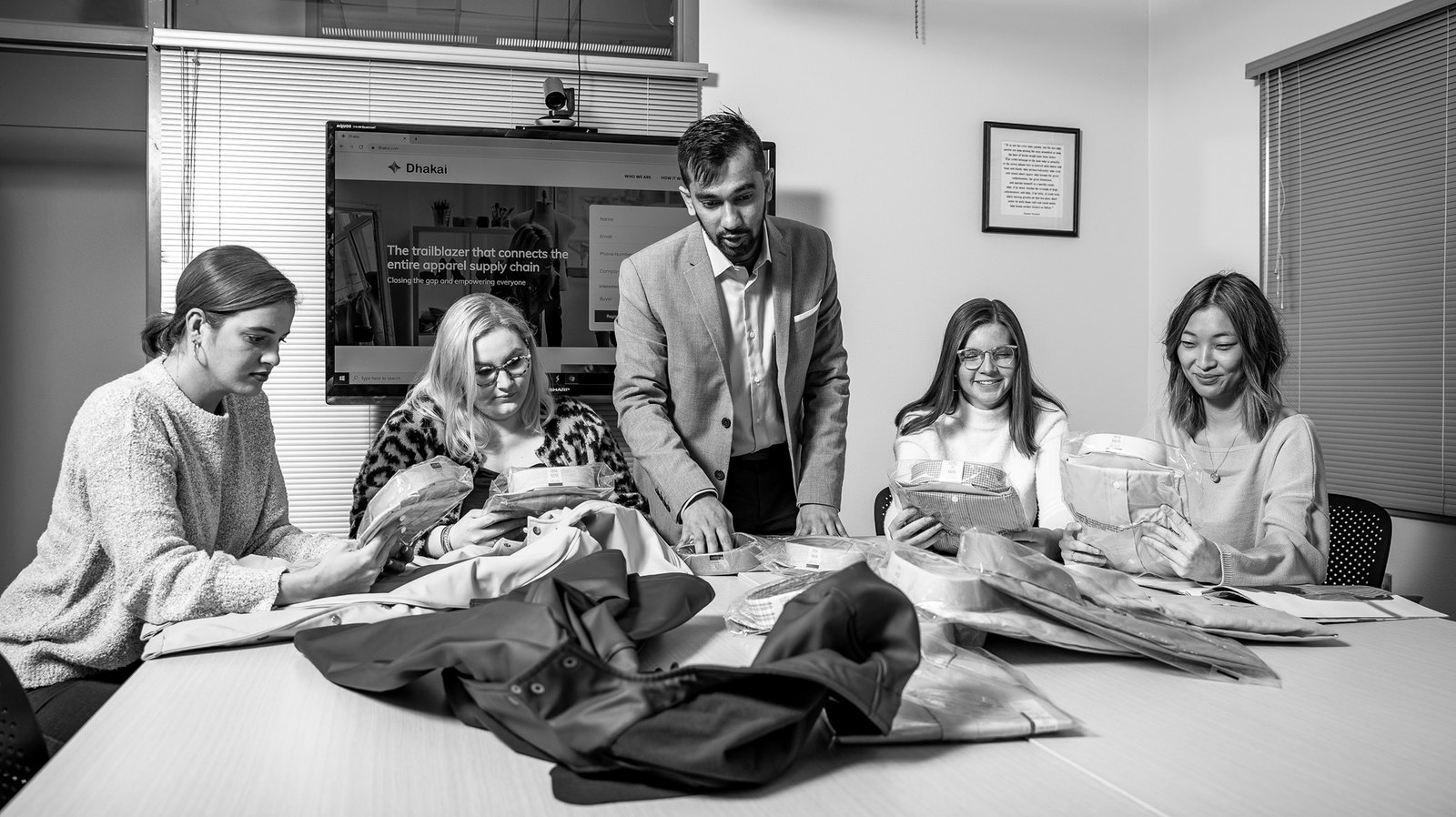
That is SourceEazy. “Tell us what you want to sell, and our AI agents help you discover products, create designs, launch your branded store, and manage sourcing, manufacturing, fulfillment, and delivery, all from one platform.”
“With the advancement of AI agents, we saw an opportunity to build SourceEazy and make launching a physical-product business as simple as prompting AI.”
SourceEazy pitched among the semifinalists. He was clear about what he wanted out of the week: “the $25K investment, meaningful connections with investors who can support our next stage of growth, and deeper relationships within the Midwest startup community.”
VI.
Which brings it back to the question from the salvage yard. Why here?
Russel did not hedge. “Building SourceEazy from Iowa has been a huge advantage,” he wrote. “The Midwest has given us access to incredible mentors, investors, customers, and a community that genuinely supports founders.” Programs like Techstars, he said, and organizations across the Iowa startup ecosystem helped them build relationships and grow from the ground up.
Asked about the hardest part of building a medical company from Iowa, Maggie answered with something that has little to do with Iowa. “The steep learning curve of business ownership has undoubtedly been the greatest challenge,” she wrote. Going from clinical medicine to running a company meant learning manufacturing logistics, global supply chains and corporate structures from scratch.
“However, I believe that steep learning curve is a universal hurdle for any founder, regardless of geographic location.”
And she said what the place gave her. “The depth of local support has been incredible. From regional economic development initiatives to a tight-knit community of mentors and fellow founders, Iowa has provided the foundational infrastructure and genuine encouragement we needed to turn a clinical frustration into a market-ready innovation.”
That is the answer Jon Lensing’s question was waiting for, and it came from the founders.
VII.
Both of them know where they want to be a year from now.
Russel wants SourceEazy to be the default AI platform for launching and scaling a physical-product business. “Most importantly, I want a creator to be able to describe a business idea in one prompt and have SourceEazy launch and operate that business from product creation to manufacturing and delivery with minimal human intervention.”
Maggie wants to grow the sales pipeline at home and abroad. “But beyond the revenue milestones, what matters most to me is the clinical impact,” she wrote. “Over the next twelve months, I want Koos Medical Innovations to decisively prove that a better-designed gown saves lives.”
In September, Kaylee said every founder is additive to the wave, whether or not they make the crest. This year the crest was a water company from Coralville. The wave was everyone else in the room.
The organizers summed up the week in one word, and it was opportunity. They are already asking for ideas for 2027.
The question will come up again next year. The founders already have an answer.
Sources: Iowa Startup Week, announcements to attendees, October 1 and October 2, 2026 · Bellwether, “Every Founder Is Additive to the Wave,” September 25, 2026 · Axios Des Moines, “Iowa startups explore better ag tech and bioplastics,” September 29, 2026 · KCRG, “Coralville company receives funding for nitrate removal technology,” December 10, 2025 · Poultry Patrol, About · Centers for Disease Control and Prevention, Healthcare-Associated Infections data.
Free · Every Friday
The Bellwether Brief, free
One email a week with the week’s stories.