Have a Year’s Worth and Get to It
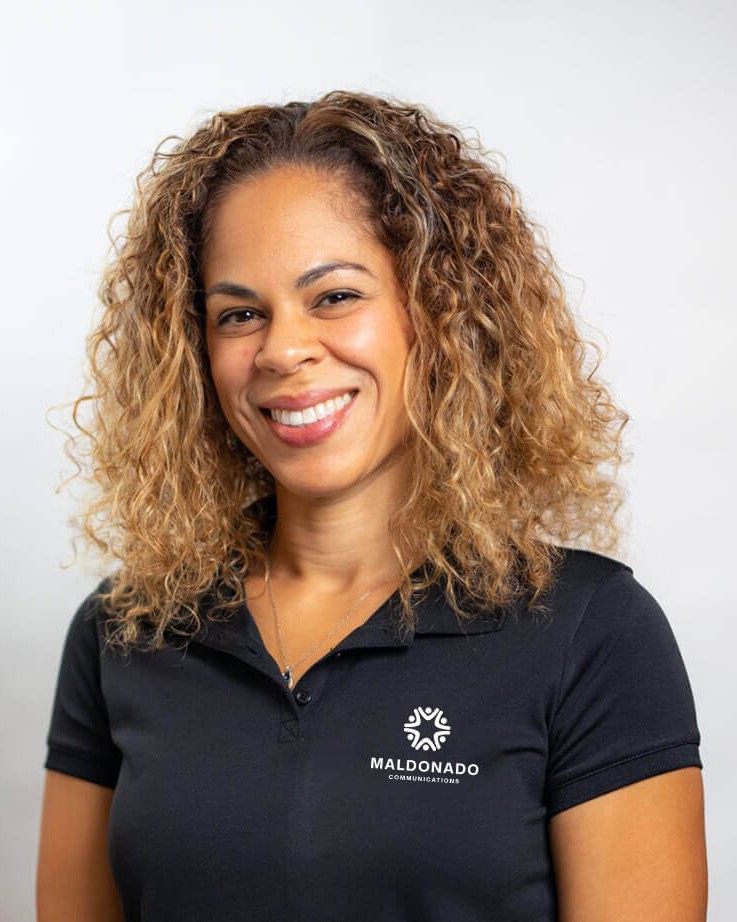
Michelle Maldonado spent more than twenty years in corporate public relations, then almost six years inside someone else’s agency before she went out under her own name. Maldonado Communications is a brand strategy firm in the Lehigh Valley. Her advice to anyone still commuting is one year of runway, and then work.
I.
She has had the company for about six years and run it for about two, and she can explain the gap.
“The business has been in existence, I’m going to say officially almost two years, but I have been incorporated for about six.”
The six-year version started with somebody else’s agency. After more than twenty years in corporate public relations, communications and a little marketing, she left and took some time to figure things out. Soon she was consulting for a man who was starting a digital marketing firm.
“It was just him and one other person and he needed somebody to help him with new business. So I just stepped, I had the time, so I stepped in and basically that took me into a relationship of almost six years.”
Partway in, the firm went after a request for proposals that needed a separate communications entity. She became it.
“And so I said, call it Maldonado Communications, we put together a website real quick and there you go. It was an unofficial launch.”
She left that relationship about last year. Between leaving the firm and going forward under her own name, a client came along.
“I had a client and that kind of gave me the confidence to go ahead and just go on my own.”
One client was enough.
II.
Her corporate years ran through Fortune 500 brands, and through a niche she walked into because of who she is.
Most of her clients were consumer packaged goods. She led a number of campaigns aimed at multicultural markets. She is of Hispanic descent and speaks the language, and she arrived at the moment Hispanic consumers were being treated as a market worth reaching.
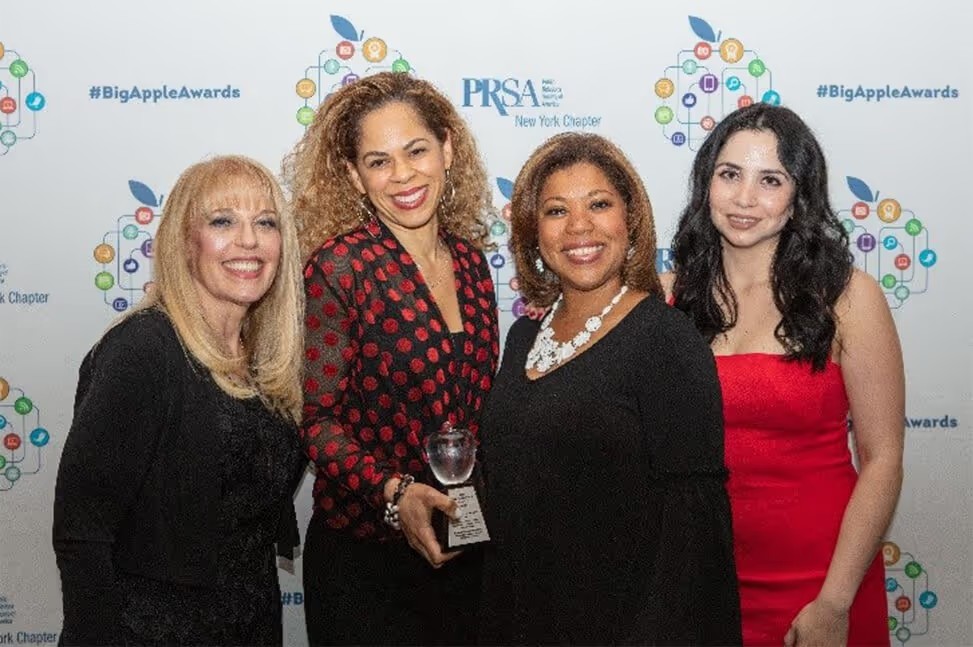
“I was just at the right place at the right time and got to work with some really great clients on Hispanic focused campaigns, was able to help the various agencies that I worked for get recognized with awards. It was a really fun, nice ride.”
“But, you know, public relations was something that I enjoyed, but I wasn’t 100% in it.”
The agency years showed her what she was in for. She had always been interested in brand marketing. As a PR person she had done branding projects here and there, alongside some really great brand strategists. At the digital firm, with new clients coming in, she took those strategists’ frameworks and adapted them.
“I just kind of like made it up as I went. So teaching myself.”
“They’re still implementing, you know, they still have those logos, they still have the taglines, they still have the positioning statement.”
So the brand work became the company. “Communications is in the name. I call myself a brand strategist now.”
From the brand, the work runs on into the website, the search optimization once the site is up, and social media strategy: “establishing a presence and visibility for the clients.”
III.
The itch came years before the exit.
“I had always had a itch for doing my own thing. So even while I was in corporate, I was also doing side hustles, if you will.”
One had nothing to do with marketing. She cared about health, so she got certified as a health coach and took clients in the evenings once work was done. Sometimes she was on a client call on the commute home. Some of those clients really did improve their health, and they gave her great testimonials. She opened an LLC and promoted herself as a health coach.
“I always saw it as supplemental.”
It gave her a taste for making money on her own. It did not get her out.
“I was a single mom at the time, and I just could not see myself leaving the corporate, you know, pay.”
A layoff did it. It gave her an opportunity to regroup, and some income to live on for a period while she figured out what came next. What came next was the digital marketing firm. Looking back, she has a word for the role.
“I was really functioning as a fractional. So I would say a fractional chief of staff.”
Client services. New business. The whole sales process. Brand strategy for the clients who wanted it. The social media team. She was embedded in an agency that was not hers.
“It was a real nice in between working for someone else and having the comfort of somebody else being worried about, you know, running the business, if you will, me being the embedded person, but without the benefits.”
“I’m not sure if I like it. In some ways, it feels pretty secure. And in other ways, it doesn’t. I was in a real limbo in between those two.”
Then she called it.
“I can’t be in between. I’m either going to be working for someone else officially W-2, get the benefits, do all that, or I’m going to just go for it, be independent.”
“I think it was gradual and it was a little bit of circumstantial, but I was also driven towards it because otherwise I wouldn’t have taken the chances.”
IV.
The other reason she left was her son.
She was commuting into New York City from New Jersey. Every place she worked, she pushed to work from home, even twice a week.
“This was before COVID. I didn’t feel like I needed to be supervised.”
She never micromanaged her own teams. “I had a lot of faith in them.” The answer was still no.
“That was a real thorn on my side. Once I had my son and then it’s just the first five years of his life, just not really being that present was very difficult for me.”
She was divorced, raising him on her own. The weekends became recovery.
She wanted to be there for him emotionally as well as in the room.
“It was 2018 when I finally stopped commuting into New York.”
Working from home was part of the agreement with the digital firm. It changed everything.
“Being able to be home when my son came home meant the world to me. So any salary cut adjustment sacrifice I needed to make, and I made sacrifices.”
She left New Jersey for the Lehigh Valley in Pennsylvania. The move cut her expenses enough to sustain independent work from home and put her son in a really good school system. She did not know anyone there.
“I said, screw it. I’m just going to go.”
He went to a very good middle school and a very good high school. He is eighteen now, and off to college.
“There were some sacrifices made, but I would do them in a heartbeat all over again.”
V.
The guilt was specific.
Her son was technologically inclined from the very beginning. She comes from the creative fields. He was interested in things she did not understand.
“There was quite a bit of guilt, a lot of guilt, a lot of time, a lot of not being able to kind of satiate his hunger for knowledge because I didn’t even know what books to buy.”
“I would take him to a STEM camp and he would be bored to tears.”
So she let him experiment. He researched and built his own computer. He bought little gadgets and tested the voltage on them. “I had no idea what these things were.” What she was missing, she says, was the mental bandwidth to even know what to give him.
The quieter life worked. He did well academically and made a ton of friends. One day a group of his Pennsylvania friends got on a bus to New York City, the city she grew up in and had taken him to many times. He was the tour guide. Next he is taking another group to Puerto Rico, where the family goes almost every year.
“So at least I know that he has the imagination to be able to go and the confidence to plan this out.”
She has also thought hard about what guilt does when you let it stay.
“Guilt is not a great emotion to have for long periods of time. If it moves you to do something better, great.”
“But if you stay in it and hurt yourself in the process, obviously, it’s not good. But one of the things that I had to learn the hard way is to not compensate by being too permissive.”
Once she saw it, she reined it in. She is clear about who he is.
“He’s very responsible. He’s a great kid. I don’t ever have to like worry about him.”
Asked whether he has ever said the move was good for him, she answers with a forecast.
“I think that’s not gonna, either it’s never coming or it’s gonna come at a much later stage.”
She is still waiting.
VI.
Running it alone means arguing with yourself.
“You’re running things pretty independently for the most. And so you’re just having these dialogues with yourself. So sometimes, it’s difficult to know if you’re just spiraling for no reason, like, what is your sense of reality, and you kind of have to do quite a bit of reality checking.”
So she built the check in. Once a week she gets on a call with a group of other women entrepreneurs. She also has an accountability buddy, a little further ahead in her business, with a lot of the same pain points.
“We help each other resource wise and also give each other moral support.”
The rest is her own work: personal nurturing and self-discovery, “in order to stay grounded, in order to be able to understand that a bad day is just a moment in time.”
Her reason for doing it keeps changing shape.
“Fulfillment was it for a while, but that’s not really cutting it anymore, because this is reality now.”
She is living the independent work life she wanted, on her own terms. The next reason is paying for his college.
“That’s a big financial why for keeping me going with the business.”
The hardest part, she says, is patience.
“You could lose sight of the progress that you’re making because you’re in it day to day. So I forced myself to take a bird’s eye view and just have gratitude for even be able to do this one more day.”
What comes next is the business itself: the clients she wants, and the support to serve them.
“I can’t do this by myself, I have some great people that are contracted.”
A full-time hire would be great for the business someday. She would have to build up to it. And she knows exactly what her own marketing needs, which is the trouble.
“If I take myself as my own client, there is a lot that needs to be done.”
VII.
Her advice is a year.
Asked what she would tell someone thinking about starting, she goes back to the woman on the commute.
“I would say that the one piece of advice I would give to that person would be absolutely do it. But plan it, and get to a place where you do not need to worry about financials for a year.”
She means the whole household.
“I’m talking about not just being able to pay your bills, but you’re also putting money aside for retirement, you’re putting money into your emergency account, you’re putting money aside for college, like all of those things are incorporated into this year, where you’re comfortable. It would give you the peace of mind that you need.”
Then the catch.
“But the caveat is, it doesn’t mean you chill, and you plan for three months.”
“Plan, execute, learn, plan, execute, learn, and you’re going to make so many mistakes, you’re going to waste so much time talking to the wrong people. Just give yourself that runway. And then by the end of the year, if you’re really diligent, you will learn a lot, and then you’ll start making money.”
“It’s have a year’s worth and get to it. Do as much as you can. Learn, make the mistakes, learn, make the mistakes, and have faith.”
She did it the long way: a side business at night, a layoff, almost six years in between. The year is the shortcut she would hand you.
She spent years making her life smaller on purpose so the business could survive. What she found on the other side was a number she will not give.
Freedom looks like
“Freedom would be basically 95% of my schedule is determined by what I want to do. And then also not worry about financials whatsoever. I’m not giving it a number because that depends on the individual.”
“I am a person that it doesn’t matter how much money I have in my bank account, I am always worried about it. And so it’s really realizing what’s enough, and then what’s on top of that. I don’t need to have my closet rotating with new things every two weeks or three weeks, like, I don’t need that anymore.”
“I’m actually okay. It’s being okay. It’s being good and not comparing.”
It’s being okay. Michelle Maldonado · Maldonado CommunicationsSources: U.S. Census Bureau, American Community Survey release CB22-155, September 15, 2022 · JPMorgan Chase Institute, “Cash is King: Flows, Balances, and Buffer Days,” September 2016.