I Was Made for More Than This
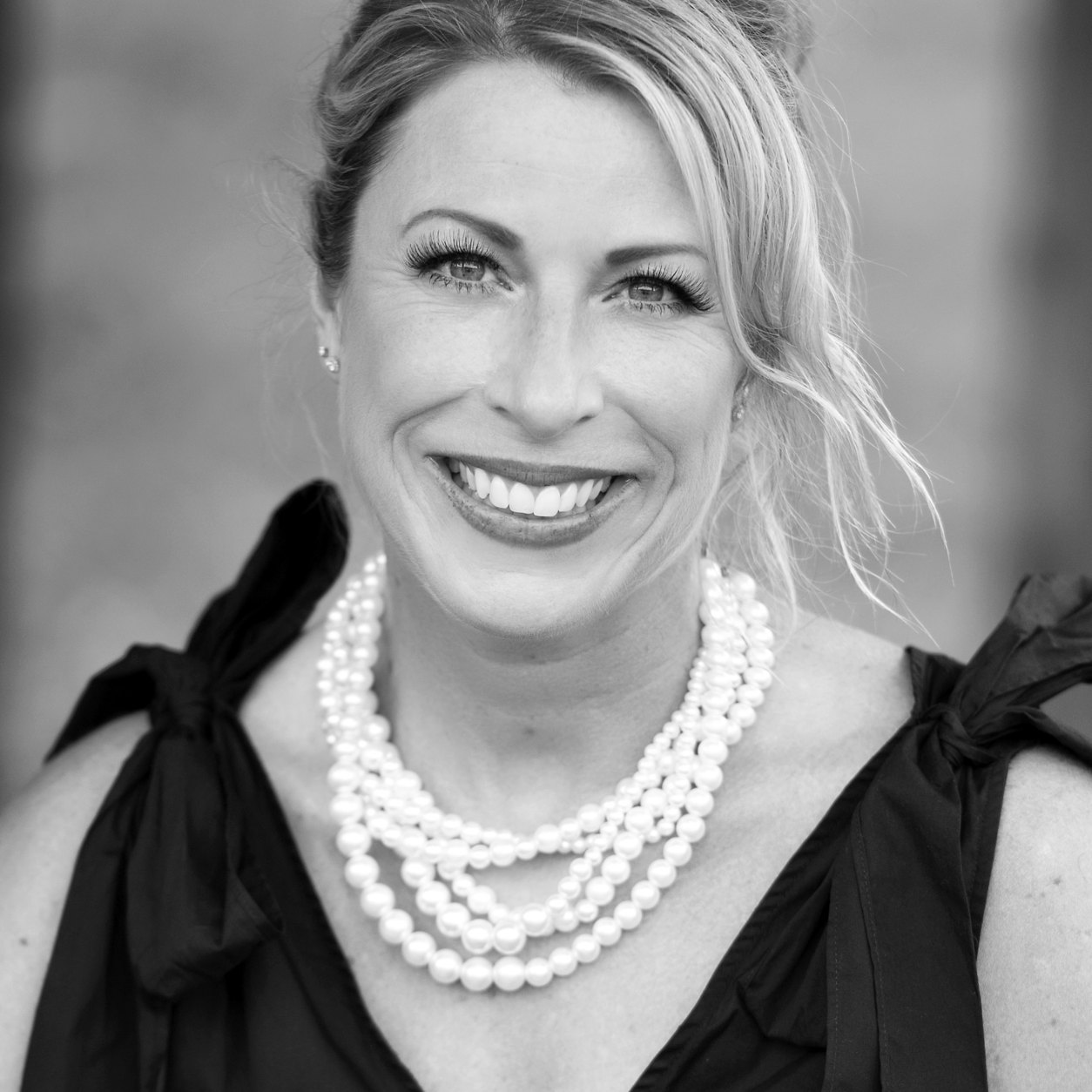
Abbey Robertson spent fifteen years building a real estate business in the Des Moines area. Over the past year she felt burnt out, got sick, and sent both of her daughters off to college. She gave this interview from the middle of it, and she calls it the eye of the storm.
I.
She started thinking about leaving real estate before she got sick.
“In 2025 I had a really busy year in real estate. Didn’t have any help, as my assistant left, and I just got so burned out. Being a single mom and a business owner requires the time of two people. So, at the end of the year, I was like... I think I’m done.”
Then she talked herself out of it.
“Again, fear-based decision. Have two kids going to college. Fear-based financially, I cannot afford to stop doing this anymore.”
And then she was diagnosed with breast cancer.
Fortunately, in preparing for retirement in a few years, at the start of the year she had already set things up so someone had her back and would handle any overflow. When the year turned into treatment, the business kept running. “So then we were already fully set up for it.”
What changed was her answer to the question.
“You get one life, and I’ve worked really hard, and I am good at this. But I’m ready to move on to something else. After 15 years, I don’t have the same desire, the passion, the things that got me to where I am.”
She reads signs, “coincidences.” The timing of people, rooms, chance meetings: she always asks herself what it was about. She reads this year the same way.
“I think with me being sick, that was God’s way of saying, okay, you’re not going to do this on your own. You’re going to keep chickening out and making fear-based decisions. I’m just going to take that choice out of you and show you what this is going to look like.”
II.
She sorts her life into two kinds of decisions.
She calls them faith-based and fear-based, and she keeps score.
“Every single fear-based decision I’ve made, I’ve regretted.”
The closest call came fifteen years ago. She almost skipped real estate entirely for a job at a startup, because a steady salary looked safer than a commission check.
“I was like, ‘Wow, that’s not great, but it’s better than nothing,’ which is what I’m guaranteed with real estate. So, I almost made that fear-based decision. How silly would that have been? And that company doesn’t even exist anymore.”
Real estate went the other way.
“It filled me up. It helped me achieve more than I ever dreamt when I started it. I just didn’t dream that it would grow so much and be that fulfilling, and allow me to have enough money to adopt kids and investment properties.”
III.
When she adopted her daughters, they were 10 and 13 and spoke no English.
They came from a country where, as she puts it, being male and older lets you do whatever you want, and being female means: good luck. She saw their arrival as something bigger than her.
“My gosh, this is God’s way of saying, ‘okay, I’m going to take them out of that environment.’ And they’re going to, in my opinion, change the world.”
She thinks they will, because of their resilience and because of what they have chosen to do with it. She believes even if they change the life of one person, they’ve given back to what’s been given to them. And the lesson she kept coming back to at home was accountability.
“Everything is a choice. Everything. Even if the choice is, how do I handle that stuff that happened to me in Africa, and how do I handle where I’m going to go with it, and can I use it?”
“I’ve always said to my girls, I want to give you a high baseline, and then when you leave the house the baseline is so high that coming off of that is still going to put you on a higher level than you would be if I hadn’t enforced that.”
Her parenting philosophy is also her business philosophy.
“I would say that with a real estate career, too, my baseline was high. I surround my people with a high baseline to this day.” People she can admire, and therefore the achievement level for her clients is high.
Her advice to new agents is the same advice, adjusted for commission.
“Just put your head down and go. Just don’t compare yourself to everybody else, because your journey is so different. Just know that you’re doing all the things, and that will come to fruition for you. Not how fast it happens, not who you’re comparing yourself to.”
This year both girls left for college.
“In the span of the last six months I became an empty nester and launched two kids. I didn’t even know if they would go to college five years ago! I got through these surgeries and all this chemo, and my cancer plan continues through 2027 and it’s just a lot all at once.”
“My perspective right now is if I can do that, I can do anything. Honestly, it really truly is.”
“I want to end my week or my day being inspired.”
IV.
Workaround girl is her own phrase for herself, and she stands by it.
“Once I figure out what it is, I can figure out the workaround for sure. I think again it’s just defining what I am going after.”
The adoption was a workaround when traditional marriage wasn’t happening after a lot of blind dates and then some. And then during the adoption journey, it came down to a workaround as well. The embassy never answered her. Then an automatic reply came back: the person had left, and here was a new name and email address. She wrote to it.
“That person was brand new, and they didn’t know that you shouldn’t answer any emails yet.”
Someone else might have read that reply as a dead end.
“I think, again, noticing that that was a gift, and figuring out how that was going to work to my advantage. That’s key.”
She was typing that very story the night before we talked. It belongs to a book she is writing about the girls’ adoption. She has not felt well enough to write much this year, but she works on it when she can, and she talks about it the way she talks about becoming a mom.
“In my mind I am going to publish this book. It is a knowing. Just like I knew I was going to have kids. What that looks like, I have no idea.”
She chronicled the girls’ first couple years as a family on an online social platform. Because it was fun to see all the firsts they were experiencing, it was inspiring to see the world through their eyes. And because she wanted to inspire others.
“I hope other people are not afraid to adopt older kids, not afraid to listen to their own personal knowing, and not afraid to continue to push through and find the workaround, whatever it is. And I think I have a lifetime of knowledge in this area that can help with that.”
V.
Knowing is her word, and she uses it as a noun.
“Women are intuitive. It’s a gift, and we all have knowings. We know when the guy or the job doesn’t feel right. But yet we are so trained to just go with things.”
What she wants to build next is a two-day retreat for women, built around those knowings. She has some of a curriculum and none of a name. The first group she has in mind is breast cancer survivors.
“But you’re not going to talk about breast cancer. You’re just in a safe space because everybody gets you because they’ve been through it.”
She can see the same room for other women: a client who runs a large nonprofit told her she would love something like it, because she has no one to talk to among the people who report to her. Women who have lost a child. Special needs moms like her sister. Adoptive moms. The list is long. And each group doesn’t require explaining.
“You aren’t going to talk about the definitive shared space that got you here. You’re going to talk about your knowing, and figure out an action step before you leave. But the safe space of women that have been through similar experiences is what I want to create, so the rest of it can come out naturally.”
Events were her business world before real estate, and she says an overnight retreat would not be hard to pull off. The part she is still figuring out is the takeaway, what each woman carries home. So very important.
She knows her own pattern.
“The thing about me is I tend to jump into things, I call myself naively optimistic. I get all gutsy, and then I’m in it for a while, and then I achieve it and work toward the top tier and then I always feel like, OK, what’s next?”
She knows what she wants her weeks to feel like again.
“I want it to be like, I cannot wait to meet these women that are coming to this thing this weekend. I can’t even imagine what’s going to come out of this. That’s how I want to feel. And that’s how I used to feel about real estate and all of the past jobs that I have strived for.”
Imposter syndrome has followed her through every job though, Red Bull included. In the real estate profession, clients and people have told her she should train realtors. But she doesn’t think of herself or her approach as definitively unique.
“I always feel that way about myself, that I’m the workaround girl, the imposter, but it’s not true. I have tons of knowledge. I’ve had a lot of jobs that were high level, competitive and truly pushed me. And I’ve learned something from every one of them.”
In her early twenties she moved to Portland with the whole intention of working for Nike, without the job. She called a temp company she knew hired into the Nike campus every single week, for months. Humiliating. But the workaround gave her the desired result, and she is friends with her Nike boss to this day. And she still keeps a few cards from an artist’s shop on the Oregon coast, from those years. One of them says to live with intention and walk to the edge.
“Isn’t that how we all feel when doing something new and scary, like we are walking to the edge? It was a lot easier when I was young and brave.”
She does not have a map yet.
“I should know enough about myself to know that I just have to try something and then learn from that and be okay with it. Whatever the result. Because I know I will find the workaround to push it to be what I want it to be. But I just need to be gutsy enough to do it.”
Another favorite quote is from Maya Angelou: “Do the best you can until you know better. Then, when you know better, do better.” That translates into her life, what’s important to her and how she wants her girls to go into the world as well.
She remembers friends or family in the past stating they were content, and being shocked. It hadn’t occurred to her that was achievable. Her mom used to ask what she was searching for with all the moving and job changes. And she never had an answer for that. Except that she knew there was more to come and she was open to finding it. She doesn’t feel that she really knows what it would feel like to be content, nor does she necessarily want to. A steady flow of joy in life with ups and downs, yes; but content, not so much. There’s too much left to do in this world.
Freedom looks like
Her first instinct was a single word. Choice. Having spent a fair amount of time around women from Saudi Arabia and Africa, where choice isn’t an option, she’s seen what it looks like to not have the freedom of choice. Then she noticed that very word was also the thing that stresses her out. But maybe that’s the very thing the Oregon poet meant about intention and the feeling of walking to the edge.
“I always tell my girls, ‘Some people say knowledge is power, but I say knowledge is choice.’ So, yeah, I guess I can say choice. Even though honestly, if I think about it, that’s what stresses me out! When I have decisions to make because I have the power of choice. Here I am, choosing a word and being indecisive about it.”
“That’s why I’m in the eye of the storm, because I have choices right now. It feels relatively calm at the moment. But I mean, it’s a big choice. I stay with what I know and I keep doing what I’m doing for the next couple years, or I make the choice to listen to my knowing, my inner Abbey... ‘I was made for more than this.’”
I was made for more than this. Abbey Robertson · Abbey Robertson Real Estate Team, Urbandale, IowaSources: Davidai & Gilovich, “The Ideal Road Not Taken: The Self-Discrepancies Involved in People’s Most Enduring Regrets,” Emotion 18(3), 2018.